Beaujolais Est Arrivee!

1 12 2010

It’s time for Beaujolais!  When I began to study wine back in the early nineties I was always intrigued by the stories of the release of the new vintage of Beaujolais Nouveau on the third Thursday of November. I remember a lot of hubbub regarding the dropping of a large format bottle on the top of the World Trade Center by helicopter and a handoff from Robin Leach to Kevin Zraly. Who knew I’d work there one day.

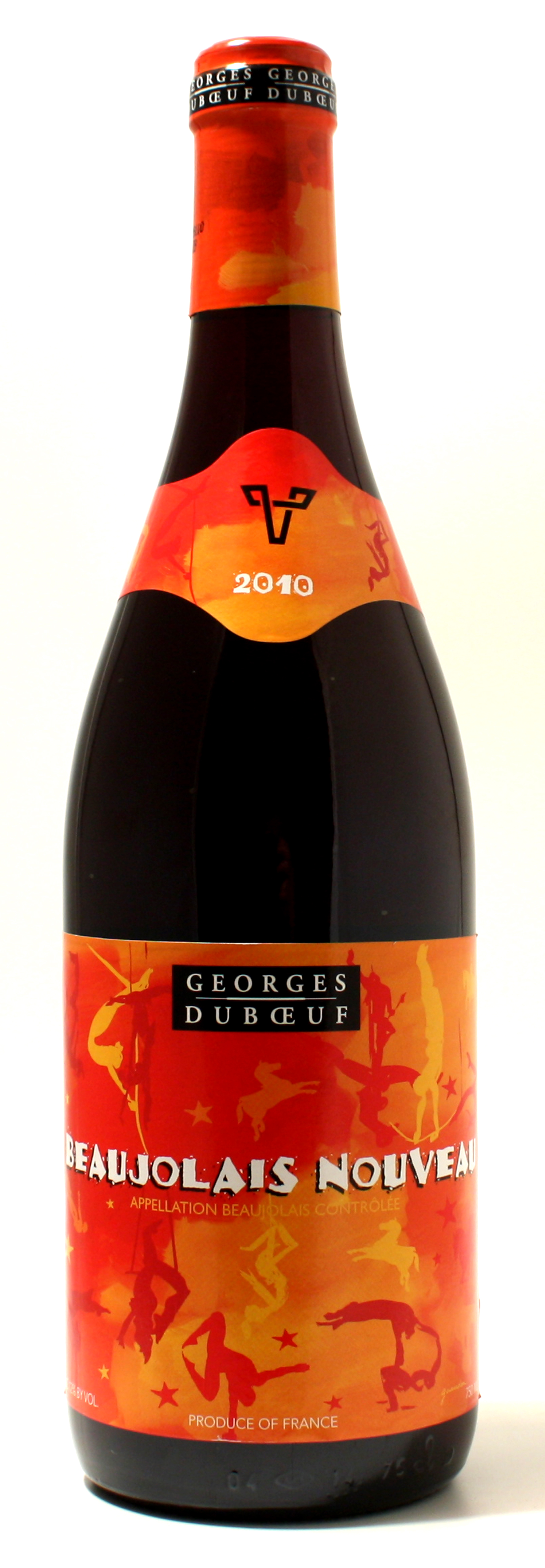
This year I was honored to meet the famed Georges Duboeuf himself and his grandson Adrien Lacombe at a dinner at La Folie, actually to discuss the 2009 vintage, not the Nouveau. But Duboeuf is one of the largest producers of Nouveau, and a few weeks ago I was really happy to receive the 2010 Georges Duboeuf Nouveau a full week before the official release date. It was vibrant magenta with very intense grapey nose very bright fresh and clean with hints of berries. Medium to medium plus acidity pleasantly low in alcohol, with flavors of red cherry, berry, juicy very nice balance, not too bitter, clean plum flavors, slight chalky note, very fresh and drinkable.  All that a great nouveau should be. As much as I love Nouveau unfortunately all the publicity stunts surrounding it have detracted from the reputation of the region as a whole and a backlash against Beaujolais has ensued, mostly due to misunderstanding.

Beaujolais Nouveau is a perfectly simple and delicious beverage not meant for lengthy pondering while Beaujolais can be so much more.  Nouveau undergoes a special production process called carbonic maceration that produces a drinkable fruity wine very quickly with a bit less tannin than the traditional method so it doesn’t need extensive aging and can be enjoyed just mere months after the harvest. When you get a Nouveau this year you’ll see it will be the only 2010 wine on the shelves perhaps with the exception of some similar styled southern hemisphere wines. It’s sad that Nouveau is so maligned because it is a style of wine that I like, especially when I want to just drink a simple glass of wine and not pontificate.

Recently the Beaujolais region held a somewhat daring Asian inspired lunch featuring some more serious Beaujolais at RN74 for their new campaign “Light by Beaujolais”. By “light” they do not mean simple but transparent and lively. The wines made from the Gamay grape have a tendency to have light body, low to medium tannins and vibrant juicy acidity making them very food friendly. The region itself is just south of Burgundy but a major difference is a change in the soil, more granite and less limestone which resulted in a decree forbidding Pinot Noir from being planted there. So really Beaujolais shouldn’t be seen as an inferior wine. In fact there are ten Beaujolais Crus or sub-regions known for having the optimal growing conditions and producing some of their best wines. So I would suggest out of tradition you find yourself a juicy bottle or two of Nouveau to drink as your guests arrive (cooking wine!) for holiday meals and then try some “regular” Beaujolais or Beaujolais Villages or Beaujolais Cru with the actual meal. Just be sure not to let the Nouveau languish around your house too long. Drink it soon while it’s freshest!

Some great non-Nouveau Beaujolais
Domaine Paul Etienne Beaujolais-Villages 2009 (The Wine Trading Company 415 731-6222)
Chateau de Raousset Douby Morgon 2009 (The Wine House 415 355-9463)
Domaine de Colette Beaujolais-Villages 2009 (Blackwell’s Wines & Spirits 415 386-9463)

Trivia Fact
The ten Beaujolais Cru are:
Brouilly
Chénas
Chiroubles
Cote de Brouilly
Fleurie
Juliénas
Morgon
Moulin-à-Vent
Régnié
Saint-Amour

Sometimes you may see just one if these names on the label.

Map of Beaujolais Vineyards


A Day of Terroir

16 11 2010

I always find it startling when a day seems to develop a theme that comes out of nowhere.  A few weeks ago I had scheduled a big day of events, but I was a bit weary after a long night at the finale to SF Cocktail Week, the Chartreuse karaoke gong show (and not I did not win but I did not get gonged either).  I knew I had a vodka tasting and a wine dinner but sometimes the details of these invitations become a blur (although I do remember that the Mondavi wine event invite was a box of dirt0, so I forgot exactly what the events were really focusing on until I actually showed up!  It sort of hit me unexpectedly that the theme of the day was Terroir or Sense of Place, ironically I was supposed to teach a class about the subject the next week, so it was very apropos.

The concept of terroir is more often reserved for wine tastings so it was very unique to have this presented as a theme by a spirit brand.  Luckily spirits companies are keyed in to the sleeping patterns of spirits pros so the lunch event for Karlsson’s Gold vodka started at 1pm.  When I walked in some of the attendees reminded me of my vocal musings the night prior.  Master Blender Börje Karlsson was on hand to talk about the very unique vodka that he produces.  Vodka can of course be produced from almost anything, wheat, rye, quinoa, potato, grape… and of course each base produces a product that has a unique flavor profile, but the irony is that many producers who chat up the public about the base of their vodka also have a vodka that is distilled multiple times resulting in an almost flavorless product.  Great if you are sipping on a Screwdriver at work and don’t want your boss to smell it on your breath or if you do not like the taste of alcohol, but this may be a reason that I have not been a huge vodka fan.  I do not want to drink just to drink, I am a flavor addict.  Karlsson’s Gold is truly different, it could be said it is a vodka with terroir.

Karlsson’s Gold is made from virgin new potatoes from Sweden’s Cape Bjäre and is distilled only once.  This part of Sweden is famous for their potatoes in fact!  There are seven varieties of potato used to make Karlsson’s gold and much like wine each potato harvest provides different conditions, some years more starch, some less (vintage variation!).  I found it interesting to taste through the range of different potato varieties grown in different locations.  Each was labeled with the region it was from and even the name of the farmer!   There really was a huge difference amongst them, as well as significant vintage variation.  Most people assume that spirits are unchanging and this cannot be further from the truth.  The 2004 Solis was supremely powerful and aromatic, 2005 spicier and 2006 more neutral.  Upon some research I discovered that the 2004 crop was one that matured very quickly and apparently when ripening is fast it creates more complexity and strength in the flavor of the potato.  2005 was a cooler year and resulted in slower ripening giving the 2005 more smoothness.  Who knew!?  The key is taking all these distinct components and blending to produce a product that is consistent, harmonious and delicious.  Karlsson’s Gold is a great amalgamation of the various types of potato and offers a spirit that actually has a lot of flavor.  The beauty is it can be used in cocktails but is also really enjoyable on the rocks with cracked black pepper.  It is truly a testament to the skill of Börje Karlsson.  It was such an interesting event!

Then after a short break to sweat off the booze it was off to Saison in the Mission.

I had never been to Saison, what a perfect location for a tasting about terroir.  Robert Mondavi Winery hosted the event featuring their wines and winemaker Genevieve Janssens.  I am proud to say she actually took my Tasting Terroir class at the Culinary Institute of America once, I am sure she was just reinforcing information she was already familiar with but it was an honor to have her in class.  It just goes to show her dedication to Terroir.

What was most unusual and refreshing about the event is that it took quite a while to get a glass of wine in hand!  We all gathered around the outdoor patio and were immediately struck by a very unique set up of tasting stations featuring not glasses of wine but glasses of soil!  This took taste of place to a whole new dimension.  The idea was inspired by an installation created by Laura Parker who was on hand to guide us through this exploration into soil.  The idea is to smell the soil, taste a food grown on that soil and reflect the relationship between the two of them.  It may seem a little bit strange at first, but anyone who has experienced the outdoors can appreciate the experience if they just let go a bit.  I have vivid memories of my grandparent’s house in West Nanticoke, Pennsylvania and the soft lush smell of the stone walls covered in moss after a rain.  There is something incredibly primal about the smell of dirt, especially if you have ever dug for potatoes on a farm.  So that’s not to say that I immediately recognized the 131 Omni silty clay loam and could blind sniff that dirt versus the 122/123 Coombs Gravelly Loam on which Mondavi’s To Kalon Vineyard sits, but it was interesting nonetheless.  We tasted a sugar snap pea from by J.E. Perry Farms in Fremont (with that first Omni silty clay loam) with the soil gathered from the same furrow on which the pea was grown.  Soil collected from Bodega Artisan Cheese in Bodega was smelled with a taste of their feta.  It was a really unique way to kick off the evening, then we moved on to some of the Mondavi To Kalon wines, including the famous I Block Fume Blanc.  The To Kalon Vineyard in fact has nine different unique soil types, add in slopes and drainage and the complexity starts to become overwhelming, so we welcomed pairing these with a delicious meal, garden beans and river vegetable, chicken liver mousseline with huckleberry and rosebud was a killer combination with the Robert Mondavi 2008 Pinot Noir, Robert Mondavi Cabernet Sauvignon 2007 and 1996 with a rare Sonoma lamb and a tasty summer berry dessert with yuzu ice cream with their sprightly Mostcato d’Oro.

The two events paired seamlessly as did the combinations of spirits, wine, food and friends to create a truly unique day in the dirt.


http://www.karlssonsvodka.com/?confirm

http://www.tasteofplace.info/

http://www.robertmondavi.com/

http://www.saisonsf.com/

FACTS FOR GEEKS

Trivia Fact: The seven varieties of potato used in Karlsson’s Gold are Solist, Gammel Svensk Röd, Sankta Thora, Princess, Hamlet, Marine and Celine.

Try their signature “Black Gold” 3 oz of Karlsson’s Gold Vodka with fresh cracked black pepper on the rocks.

Trivia Fact: The nine soil types of To Kalon Vineyard are 103 Bale Loam, 0-2% slopes, 104 Bale Clay Loam, 0-2% slopes, 105 Bale Clay Loam 2-8% slopes, 116 Clear Lake Clay, Drained, 122 Coombs Gravelly Loam, 0-2% slopes, 123 Coombs Gravelly Loam, 2-5% slopes, 146 Haire Loam 2-9% slopes, 168 Perkins Gravelly Loam, 2-5% slopes, 182 Yolo Loam, 2-5% slopes


Hardly Strictly Bluegrass

1 10 2010

Hardly Strictly Bluegrass is here!  For the 10th year Warren Hellman is putting on his best party of the year for a few thousand of his closest friends.  Talk about generosity, he hosts the whole thing FREE, no need to get tickets!  The best part is that he also allows attendees to bring their own food an beverage into Golden Gate Park and enjoy the show with a picnic.  My husband Michael and I have been going to the show for years now so we have a system down.  He arrives in the first shift with all the chairs, blankets and gear and sets up a base camp at the stage we deem most worthy, we always know that we will have friends all over the park and can text and join them at other stages as the weekend rolls on if there’s someone in particular we have to see, but it’s nice to have our gear in one spot.

Food is of course vital, as is beverage, so we are sure to plan that out accordingly.  This year I was fortunate enough to receive some samples of Demitri’s Bloody Mary Seasoning and also some Karlsson’s Gold Vodka and a pepper grinder so that should be a marriage made in heaven!  I tried the Demitri’s during the Los Angeles International Spirits Competition and had a hard time choosing between the flavors, Classic, Extra Horseradish and Chilies and Garlic.  The Extra Horseradish was actually the Best Mixer of the competition.  The nice thing is that the mix comes in a super concentrate, so you can make a full batch or add to each bloody individually to match the concentration to your liking.  They also provide RimShot! a salt with spices so you can rim the glass, they even have a bacon version.  Bloody Marys are great for a festival, they are like food in fact, they keep up your energy and provide you with vitamin C.  The Karlsson’s Gold vodka is also delicious, watch for a blog about it soon.  It’s Swedish and made from seven varieties of virgin new potatoes and actually has a lot of flavor.  I might opt to bring some minis of Oro de Oaxaca Mezcal too to make a smokier version of the Bloody Marias and rim those with worm salt (it comes right on the bottle).

Me and Darrell Scott 2008

For Bluegrass I tend to be a bit more simple than my other parties opting for store bought salsas (Balboa Produce 3635 Balboa at 37th makes AMAZING salsas and its in the ‘hood so I won’t lose my parking space) and hummus but I did make some toasts for those and will make my duo of corn salsas with the last of the summer corn.  One is just corn with a pat of butter and balsamic vinegar and salt, cut the corn off the cob and cook with all ingredients on the stove while stirring until it starts to caramelize and you actually hear the corn pop!  The other is a version of corn cut off the cob with serrano chilies, cilantro and lime (and a hint of butter to saute it in.)  I am hoping to do some new popcorn versions, truffle, Sansho (Japanese pepper blend) and classic, but I am a bit concerned about the fog and how quickly it will get soggy.  I am considering the FoodSaver vacuum for that, not sure if it will work or make the popcorn taste stale…  Of course there will be the requisite Kielbasa with horseradish, a cabbage “salsa” my friend Shelley taught me to make with cabbage, habanero and lime topped with canned pepper (fresh cracked doesn’t work the same way…), Roquefort filled dates, roasted potatoes to dip in sour cream and/or onion dip, peppers and carrots, Molinari finocchiona and pepperoni salame, chips and snacks and this year I am planning to make Thai shrimp wraps with mint and basil and some peanut sauce.

Some tips regarding Bluegrass…

Try to be courteous to your neighbors, and share your blankets.  Don’t traipse your dirty port-o-potty shoes through the middle of other people s blankets, try to stay on the edges!

Pack out everything you bring in, recycle and compost!

If you live in the Richmond don’t move your car until Monday or you’ll be screwed.  Stock up on food for your house so that you have something for hungry HSB goers who are waiting for a bus.

Don’t expect to get home easily, hang and chill with your peeps and be patient.

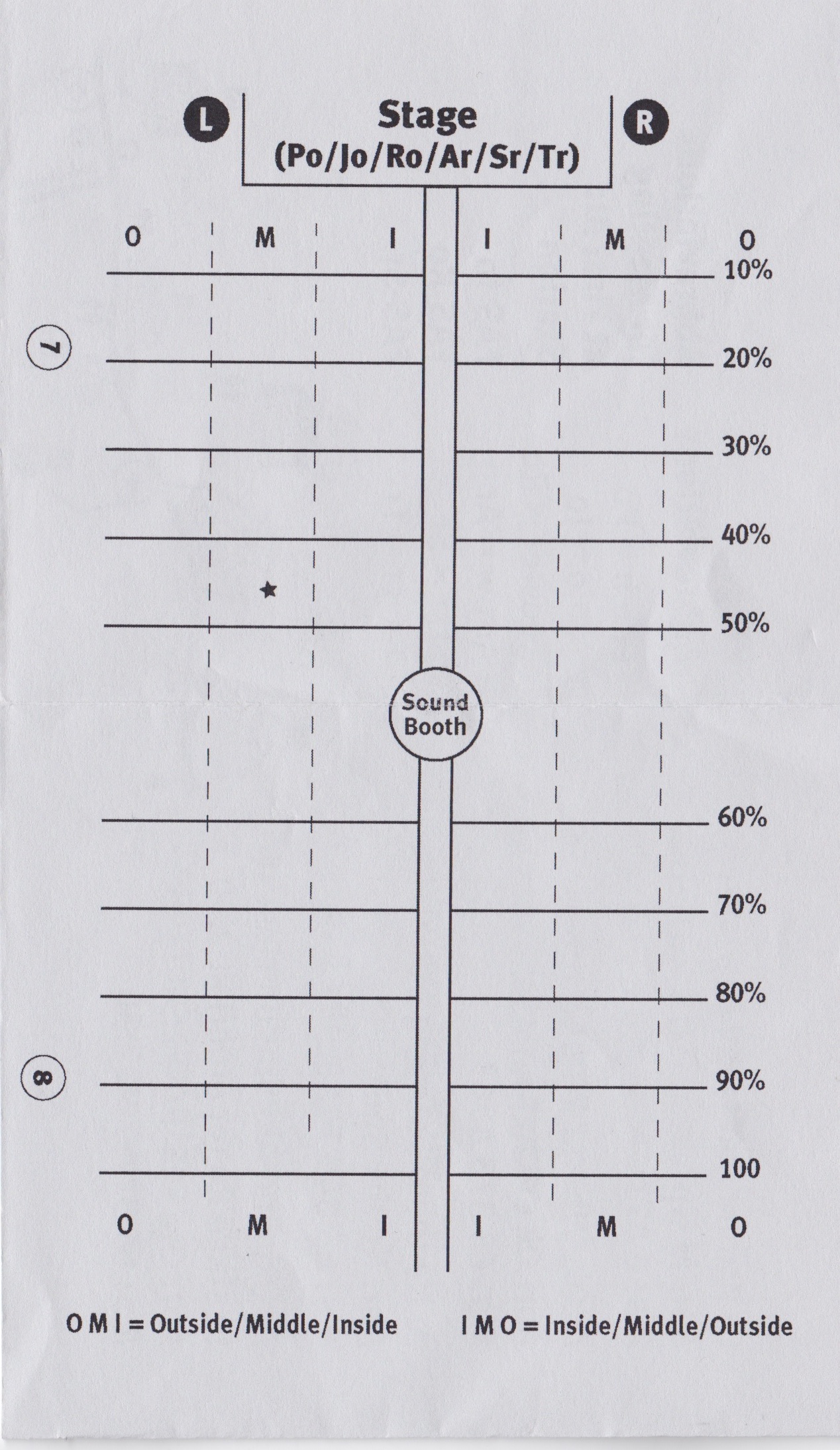
Some abbreviations for texters… My friend Ika has provided us with a handy guide, I should sell the things, that includes text abbreviations for dummies (I should have had such a fancy guide for watching the Jersey Shore…)  She also suggests a great system to tell folks exactly where you are.  Stage is 10% the far back 100%, if you are looking at the stage you can determine Left or Right, and then there’s outside, middle and inside…  it’s truly brilliant… and example is RoL47%M… SO SMART.

Porch=Po

Banjo=Jo

Rooster=Ro

Arrow=Ar

Star=Sr

Tower=Tr

And I almost forgot to talk about the AMAZING music we will see!  Our pick this year seems to be the Banjo stage.  Today Ralph Stanley & The Clinch Mountain Boys, Patty Griffin and T Bone Burnett are playing at various stages, tomorrow at Banjo highlights include Joan Baez and Gillian Welch.  I am kind of bummed that Darrell Scott won’t be here this time, but he does have an amazing new album out, A Crooked Road and I got to see him in August at Great American Music Hall.  I always have to see the legends of the weekend, Hazel Dickens, Earl Scruggs, Doc Watson and Del McCoury!  Enjoy the show, hope to see you there.  For the full schedule go to http://www.strictlybluegrass.com/2010/artists.shtml


A Legendary Day in Napa Valley

24 09 2010

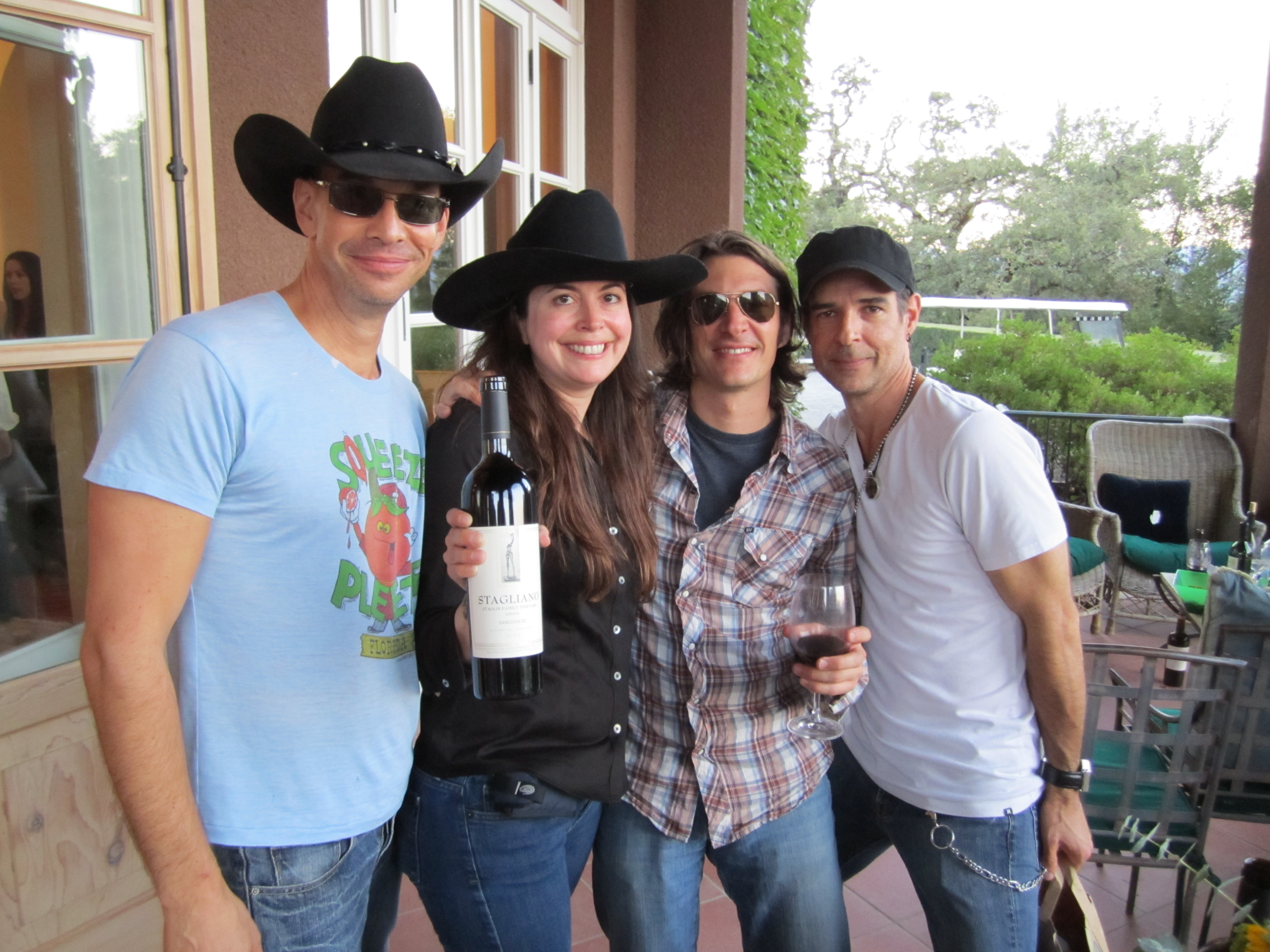
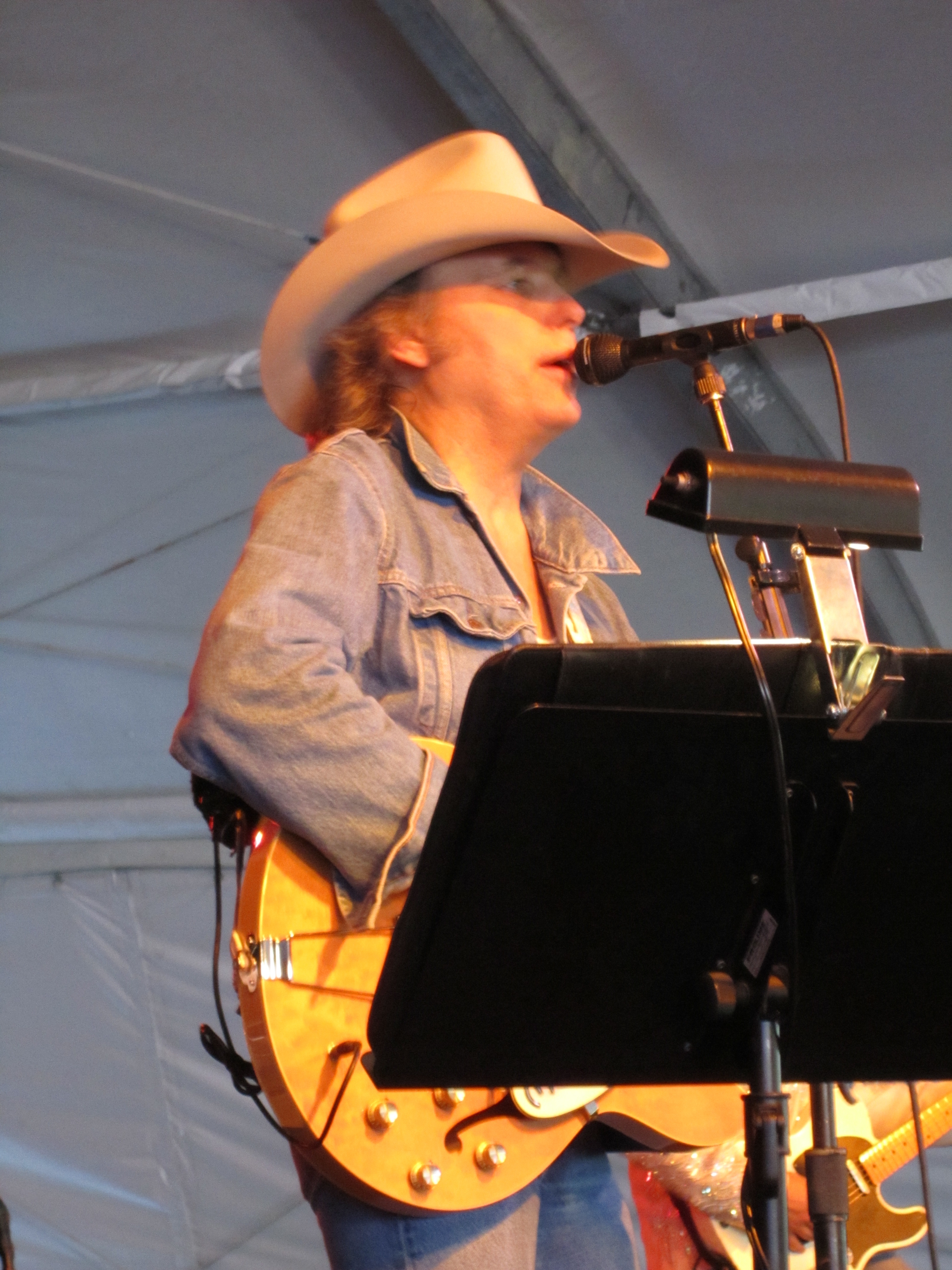
September 11, 2010 was the Staglin Music Festival for Mental Health, an event I work annually that focuses on finding solutions to combat mental health issues as well as to address the stigma often associated with mental illness.  The event was fantastic.  Highlights were a tasting of “cult” wines, a concert by Dwight Yoakam (he and his band were amazing!) and a dinner prepared by Jon Bonnell from Bonnell’s Fine Texas Cuisine.  The event was also attended by Glenn Close, her sister Jessie and her nephew Calen Pick, Rusty Staub, comedian Bob Sarlatte and other celebs who you may not have heard of but should know, for example author of The Female Brain, Dr. Louann Brizendine.  (Her latest, The Male Brain has also just come out.)  To learn more about the benefit and mental illness go to http://www.imhro.org/ and to see the amazing public service announcement filmed at Grand Central Station go to http://www.BringChange2Mind.org/

Me and Dwight's band, Mitch Marine (drums), Josh Grange (pedal steel) and Jonathan Clark (bass)
Dwight Yoakam

It’s always fun to volunteer to work the event, partly because it’s for a great cause but also the Staglin’s really host us to an amazing weekend.
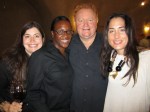
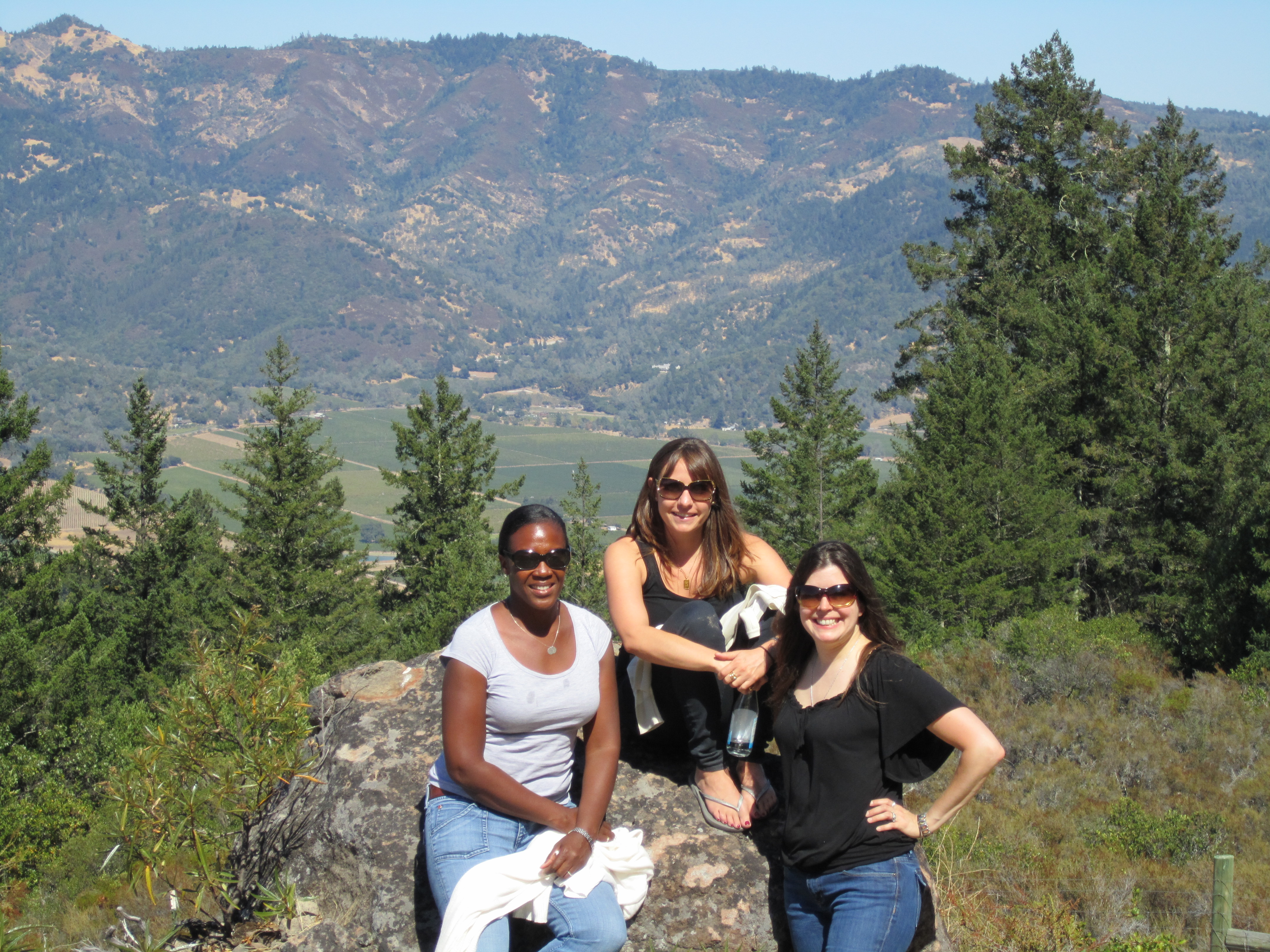
Alicia Towns Franken, Me, Rusty Staub and April Gargiulo

This year was truly legendary.  Shannon Staglin created a day that was really memorable.  I have to admit I did not know all the producers on the itinerary but I was excited to see some spots in the valley I was less familiar with.  Although I teach for the Napa Valley Vintners and the Culinary Institute of America in St. Helena and spend a good deal of time in Napa it still amazes me when I see there are still so many unexplored corners and folds, despite being a very small area there is so much diversity.

My friends and I arrived the night before the event and enjoyed a glass of wine at the Oxbow Market in downtown Napa at Oxbow Wine Merchant before heading over to Zuzu, my absolute favorite restaurant in Napa Valley.  Owner Mick Salyer was on hand to be sure we had enough Vina Tondonia Rioja Rose, we knew there were lots of big reds in our future, but we did also enjoy a nice half bottle of Revana courtesy of Natalie Vache.  It was delicious!

Beau Wine Tours donated a very comfortable bus for the group of sommeliers so no one had to drive, this is KEY to having a good time in Napa, always be sure you have a designated driver.  The bus picked us up at Saintsbury’s gorgeous Brown Ranch where some of us were staying, a really comfortable country house in the middle of the vineyards of Carneros with gorgeous gardens.  With a quick stop for coffee at Bouchon which was a bit of a madhouse we collected the rest of the team. Alicia Towns Franken from Boston formerly of Grill 23, Peter Hiers from the Monterey Peninsula, formerly of the Highlands but now Rising Star Wine Group, Patrick Mullane from Forbes Mill in Los Gatos, Mark Buzan from Pebble Beach, The DC crew Cesar Varela, David (Charlie Palmer Steak) and Maria Denton (Ruth’s Chris), and the NY crew Brian and Crystl Friedman (DelFrisco’s) and our host Shannon.

NOTE: Some of these locations are sadly not open to the public, Shannon traded in some big favors to create this experience for us!   It’s always ok to ask though so you can check the websites listed and see if they do tastings or try to add yourself to the mailing list (or mailing list wait list!)
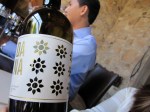
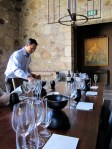
First stop was Dana Estates.  On the western side of the valley in the Rutherford appellation this property is located at the former Livingston Moffett property and upon driving up you can see it is absolutely stunning.  We were greeted in a beautiful courtyard with some Schramsberg sparkling (the perfect breakfast wine!) and learned a bit about the property from Daniel Ha.  Dana is Sanskrit meaning “Spirit of Generosity” and the fact that they were willing to share this special experience with us was just a bit of evidence of that!  Perfect for the theme of the weekend really.  The first winery was built on the site in 1883 by H.W. Helms and the courtyard and parts of the winery are built around these original ghost winery walls.  Dana Estates purchased the property in 2005 and since then has built the most amazing facility.  Clearly high end yet it has an air of comfort and the use of the old and new design elements really melds together, seems like it’s been there forever.  They make wine from three sites, Helms, Hershey and Lotus vineyards.  Philippe Melka consults on the project and the wines are stunning as can be expected.  And what would a cult wine be without an amazing package, the label features a dozen lotuses cut into the label for the twelve months of the year, life, rebirth, it’s really GORGEOUS.  Unfortunately quantities are extremely limited and in 2009 they decided not to use the fruit from the Helms vineyard so production will be even less, but they want to be sure the wines are always amazing.  We tasted Helms and Lotus 2007 (about 300 cases of each made!).  They only made 42 cases of Hershey so there was none to taste!  I preferred the Lotus, really rich and powerful, more reticent than the Helms but had an incredible chocolate mocha coffee thing going on.  Lots of power and really an infant, it’s going to be amazing.

Next stop was to see Scarecrow also in Rutherford.  This is the JJ Cohn property on what I believe to be possibly the most prime piece of Rutherford.  Right next to Rubicon Estate firmly on the Rutherford Bench this is land that cannot be duplicated.  It creates wines that just scream of the Rutherford Dust quality that Andre Tchelistcheff talked about.  We were greeted by proprietors Mimi DeBlasio and Bret Antonio Lopez, Nancy Andrus of The Duck Blind who markets the wines, and consulting winemaker Celia Masyczek who also has her own wine, Corra and two cheerful white Bichon Frisees.  The group quickly derailed the planned agenda by asking about the ancient vines on the property and we traipsed into a vineyard of giants.  Head trained in the old style they were like stalwart little trees.  While walking back to the house Mimi and I exchanged tequila tips and she promptly ran off to get me a mini bottle of Corzo Reposado which I will add was VERY useful at a recent Willie Nelson concert at Wente Vineyards where I traded a shot of said tequila with Karl Wente for three bottles of wine!  Although I think we could have convinced him to give us the wine anyway finding the tequila in the middle of the show when we had sucked down the first few bottles was very welcome.  But I digress… Celia led us through a tasting of her wine, Corra and Scarecrow both 2007.  Amazing wines.  I won’t say who said it but after tasting the Corra one of our group whispered to his neighbor, “This wine keeps pumping and pumping and pumping.”  And it did.  It was dense and concentrated yet elegant and full of flavor and passion.  Celia makes wines that are really unique in Napa.  Then we tasted the Scarecrow, just amazing.  Dusty and earthy yet rich and flavorful.  And enjoying these wines in the home of Mimi and Bret, such a beautiful and historic place was truly amazing.  Bret told stories of “Aunt Bessie” and how she selected every piece of furniture.  He even took us on a tour of the home which has really interesting twists and turns, the original wallpaper, beautiful and pristine despite its stains.  It was such a cool amalgamation of these old elements that were carefully selected with the new treasures that Mimi and Bret have added, amazingly they meld seamlessly.  It’s a gorgeous and very special place and imbued with the spirit of their ancestors.  Before we left we got a tour of the old barn replete with an inchworm ride toy that actually brought a tear to my eyes, as did the barn itself.  Memories of childhood flooded back, summers at my great grandfather’s farm in Pennsylvania.  Knowing that Bret spent summers here and was now living here completed the moment.  Truly a unique visit.  Bret took a shot of us in the barn, he is primarily a photographer, and we headed back to the bus (kicking and screaming because we didn’t want to go) but luckily our lunch from La Luna, a Mexican market in Rutherford, was waiting for us and Mimi sent us off with chocolates too.
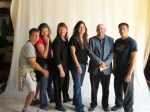
Just as we were digging into our food Nancy warned us that there would be snacks at the next two stops, but we could not resist the juicy burritos and the amazing chips.  The next stop, Checkerboard, does not even have any wine to taste yet, but they wanted us to see the site which was way up valley in the Diamond Mountain appellation near Calistoga.  Although we did not get to taste it was a refreshing and needed break after the big wines of the morning and we took ATVs through forests all the way to the top of their property where we got an amazing view of the northern part of the valley.  When we arrived there was an amazing spread for us, Calistoga waters (of course), gazpacho, shrimp skewers, cheeses, we enjoyed the picnic and the fact that we were their first tour EVER!
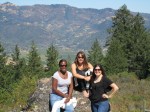
Alicia, Shannon and I at Checkerboard, Diamond Mountain

We headed back down the mountain and zipped all the way over to Ovid Vineyards where we were greeted by Janet Pagano and Assistant Winemaker Austin Peterson.  Winemaker Andy Erickson was busy at his home making us dinner and actually building a table for our meal from reclaimed wood.

Ovid

Ovid is situated at the top of the slopes of the Vaca range in the Oakville appellation high above the valley floor.  It’s almost as far as you can get from where we were at Checkerboard and on the opposite side of the valley.  High above even Oakville Ranch this site faces West so they receive a great deal of afternoon sunlight up there.  The winery perched on this hillside takes advantage of the sun with huge windows that soak in the amazing view.  They have a gravity flow system of tanks and everything is all clean and compartmentalized yet very comfortable.  I immediately gravitated

Ovid

towards the long cozy benches in the main room where I could have easily laid down to read a book and napped like a cat in the sun, but they had other plans for us.  The tanks of concrete were selected by visits to numerous producers in Bordeaux and all the research resulted in a winery that is really efficient in all aspects.  They also have an orchard and bees so although the place looked very modern and high tech there’s a soft side to it.  The wines were also incredible.  We tasted a comparison of a wine that was fermented in barrel versus one fermented in concrete (I was wrong I will admit it this once).  They were definitely different but it was really hard to discern exactly how.  Guess that’s why I am not a winemaker!  Then we tasted the finished wine from 2006, just amazing.  It was so concentrated that when we swirled the glass the legs just sat there suspended above the wine.  Dense black fruits, blackberry, cassis, really powerful but with very balanced tannin.  Possibly my favorite Cabernet of the day.  And of course they pulled out two huge platters of berries and cheeses (an amazing aged Comte that with the wine was just perfect) and their own olive oil, breadsticks.  The works.  Again Shannon had to pry us away and back into the bus as we were keeping vineyard guru Larry Hyde waiting all the way down in Carneros!

We arrived at Hyde Vineyards a bit late but Larry was very patient with us, and although we had to cut the tour of the vineyard in half we had a chance to walk out to where he has both Chardonnay and Syrah planted.  He puts the Syrah near the riparian areas near the river since the sharpshooters aren’t as attracted to its leaves.  Larry Hyde is legend.  His own wine Hyde de Villaine http://www.hdvwines.com (HdV) is a joint project with the also legendary Aubert de Villaine from Domaine de La Romanee Conti in Burgundy and his own domaine in Bouzeron.  Despite this Larry almost gets more notoriety for wines from the wineries he sells grapes to.  His client list reads like a who’s who of the top wines produced in the valley, some of my favorites being Patz & Hall, Ramey and Kongsgaard. His Chardonnay is tough to beat and as such those that get their hands on his fruit usually vineyard designate it as Hyde.  He is at heart a vineyard guy so we discussed the trellising, row direction, soil types, terroir.  My kind of visit, very intellectual.  Then he invited us into the guest house on the property where his wife Beta presented us with yet more delicious cheese and crackers (it would have been rude to pass it up!).  We tasted pretty much the entire line of wines and sat and enjoyed the company of Larry and his wife and their new German Shepherd whom I (and the cheese) helped train to sit.  As the sun started to set over the hills of Carneros we boarded the bus again to head to Annie Favia and Andrew Erickson’s house for dinner.
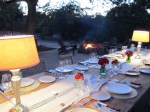
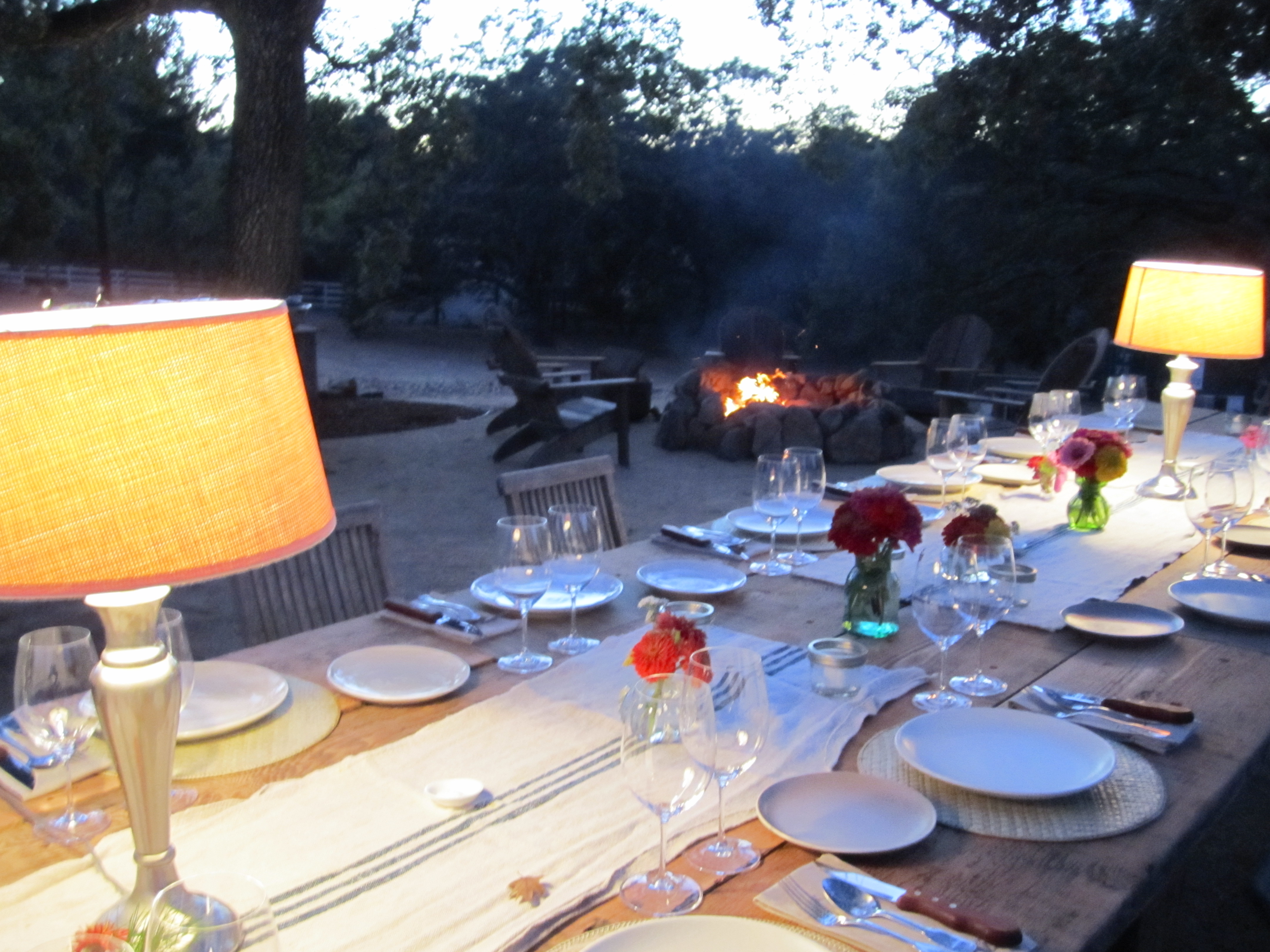
To cap off a day that couldn’t seem more perfect we arrived at the home of Annie and Andy to find a scene straight out of Martha Stewart Living.  In the expansive back yard the light was dimming over Annie’s outrageous garden filled with vegetables and flowers and the chickens were safely in their coop.  There spread before us was the most gorgeous table and an entire kitchen island set under the trees.  Electric lamps, flowers, plates of food, a tire swing, a roaring campfire off to the side and even better some Leroy Bourgogne Blanc that Annie’s sister Brigit was kind enough to bring for us.  One of the wines she sells, it really hit the spot as a palate cleanser after a day of heavy Cabernets (although Larry Hyde’s Chardonnays were similarly refreshing).  While we snacked on olives and almonds and a squash soup from the garden Andy pulled out a bag of padron peppers not to be believed.  Those peppers, to which I am addicted, are about $6 for a bag of about ten at the Ferry Plaza Farmer’s Market.  And I pay it gladly!  He sauteed them up and we all dove in (and I again could NOT stop.)  They are fun little things, you can eat ten and just enjoy their nuttiness and then one will just wallop you with intense fiery flavor!  It’s fantastic and very much a pleasure/pain thing.  Dinner accompanied by Favia wines continued with short ribs, a fantastic tomato salad and an amazing nibble: a piece of watermelon with an herb puree and a bit of Serrano all eaten in one bite.  Salt, sweet, herbal, fruity, great combination!  And all you can eat padrons.  The Favia Cerro Sur and Magdalena were both incredible but by that time I was not taking notes…  While we were dining Annie and Andy’s young girls made us cupcakes with ground coffee in the icing (their idea, and really delicious).  We retired to the fire pit and I broke out a guitar and we sang and played as the fire popped and burned. The tequila and the tequila horn also made a cameo.  Annie and Andy sent us home (to our guest house) with fresh eggs from their chickens.  And more padrons!  It was truly a magical ending to a magical day.  Food, friends, great wine and spirit and the most gracious hospitality.

If you’re planning a trip to Napa Valley go to www.napavintners.com/wineries/ to search wineries to visit!


Bordeaux, Sans Jet Lag

15 06 2010

I should know better than to tempt fate, but it seems that I have eluded the evil jet lag once again (Why do I always want to spell it jet lague? Is that French? How the hell DO you spell it?) I should not speak too soon, but once again in rare Chapa fashion I headed out to France on minimal sleep, maybe this is a good strategy. I ran the Slow Food Golden Glass Wine Competition on Thursday which was a blast, the judges evaluated about 124 wines and selected some great winners, to be honest the overall quality of the wines was so high it was impossible for me to resist staying around with the volunteers and tasting as many as I could, winners or not! It was so fun to hang out, and we had a super fun group of volunteers, and one judge, so it was a blast. Then my husband and I and two of our esteemed judges headed over to Frances for an incredible meal, gnocchi with fresh spring vegetables, amazing chick pea fritters, calamari to die for, bacon beignets, it was all so amazing! Friday was spent racing around trying to finish up my videos for Le Wine Buff! Le Wine Buff is a project I am working on to promote the value driven wines of Bordeaux, we were sent wines and had to do videos tasting said wines with the public, it has been so fun! I actually opted to take my videos on the road and drove around some of my favorite nature sites, Ocean Beach, The Golden Gate Park Buffalo Paddock and Chain of Lakes, Baker Beach, etc. These will eventually be on http://www.enjoybordeaux.com. Between that and packing and prepping for the journey I ended up staying up all night, til 5 am Saturday morning which meant I had about 3 hours of sleep before I had to head out to the Slow Food Golden Glass event. Great wines were served and some of San Francisco’s “slowest” restaurants (restaurants that focus on respect for the environment as well as enjoyment of a meal the way that it was meant to be, rather than fast food) served up their wares. Sadly I had very little time to taste, and I didn’t even get a piece of Craig Stoll’s lardo butter and chili rubbed corn, but it looked amazing.  Pig heads were displayed in force by multiple booths and I really enjoyed a fine mostarda made by Nana Mae and the Girl and the Fig in collaboration as well as delicious crackers and cookies made by Rustic Bakery http://www.rusticbakery.com. Sadly my time at the Golden Glass was way too brief, so I sped off to the airport and flew on down to LAX to meet my flight.  For Slow Food Golden Glass Wine Competition Awards you can find the list here!  Golden Glass Awards

Despite some serious initial stress due to only TWO ticket agents at the SFO United counter I was able to calm myself down and fly down to the coast to LAX where luckily the transition was easy. I grabbed a quick beer and hit the duty free to hydrate my face with a free sample of the new Dior face serum made with sap from Chateau Yquem vines, seriously! I arrived at Charles de Gaulle feeling relatively refreshed, not sure if it was due to the three seats I had to stretch out across on Air France, the boozy sleep on the plane or the new face cream, but at $350 a bottle I am going to have to assume it was the free wine. The layover was painless especially due to three macarrons I had from Laduree, Terminal 2F, cassis/violet, caramel fleur de sel and orange blossom. They were AMAZING and well worth the price, 1.5 Euro apiece!

Flew on over to Bordeaux and headed straight to the hotel to drop the bags and then onto dinner, a short walk from Hotel Normandie, on to Chez Jean to meet our group of fellow wine buffs and Alan and Ian, the Mutineer guys as well as our hosts Barbara and camera technician Andrew from Creative Feed, who have organized the Wine Buff. Luckily I knew most of our buffs so I didn’t feel so bad showing up after about 20 hours of travel unshowered and we enjoyed a great meal starting with a carpaccio of Coquilles Saint Jacques (scallops) that were incredibly sweet and delicious and a boeuf, beef, dish that had foie gras sauce and fries, likely fried in duck fat and drenched in said wonderful gravy.  I did notice that Andrew was immediately filming all of us, which was a bit unnerving considering how gross I felt and what not, these videos are one of the core reasons for us to visit, and it’s really interesting what they seem to want to video tape!  But so weird, I hope we don’t come off like some weird version of the Kardashians or the Real Wine Buffs of Bordeaux.  I tried to forget about the cameras and after a few glasses of wine and a few after dinner beers I hit the pillow and had a great nights sleep.  So in short my key tips to avoid jet lag…

Pull and all-nighter the night before you leave, make sure you have lots to do and that you are totally and completely stressed out.

Drink beer at the airport before the longer flight, but NOT the first flight and yes get the big beer, at LEAST one.

Drink one Champagne and two mini bottles of red wine with dinner on the plane.  Drink water too…

Do not put your head on those pillows, instead cover them with the blanket IF and only if the blanket is in plastic.

Never nap after arriving…try to stay up as late as possible and be sure to drink enough that night to make you sleepy.

I woke up the next day ready to go and refreshed, I hope I am not jinxing myself and it lasts…


Home at Last to Work on the Golden Glass

1 06 2010

Finally made it home from Italy, another twenty-four hour journey through Munich, which luckily is a decent airport with good shopping, a nice German brewpub with spaetzle (basically a blob of mac and cheese like spaetzle) and good Hefe-weissen, a decent coffeeshop too, where I had an “Espresso on the Rocks” all of this mind you during a three hour delay due to, wait for it, yes, more failed equipment.  All in all it was acceptable until we had to hover over Point Reyes for another half hour due to fog.  Funny how just a half hour can really set you off after a 12 hour flight.

But at any rate the trip was fantastic.  More notes and wine recommendations to come, but for now I need to get back to some other projects including the Golden Glass Wine Competition and Tasting!  On June 12, 2010 I can get my fix of Italian wines as well as wines from all over the world that have a “green” sensibility.  http://www.thegoldenglass.com/

Presented by Slow Food of San Francisco, The Golden Glass Wine Competition 2010 offers green producers a way to showcase their products!  Entry is now open to wines from around the world, not just wineries that are participating in The Golden Glass tasting in San Francisco on June 12, 2010.  That means that wineries can enter wines even if they cannot make the event, opening up the playing field to multiple categories of wine from around the world.  Wines will be judged on their merit with either no award, bronze, silver, gold, best of class and best red, white, sparkling and ultimately Best Wine of Show.

The hallmark of our competition is the emphasis on green production practices.  Unique from most competitions, The 2010 Golden Glass Wine Competition will celebrate the efforts of over 100 international wine producers who strive to protect, nurture, and revive the indigenous and classic varieties of their regions by asking them to sign a statement of sustainability, and by only judging wines that use sustainable, organic or biodynamic methods.  I have judged wine competitions throughout the country, and although some have a special category for ‘green’ wines I have never seen such a commitment to green products.  It’s really exciting to know that when we come up with our list of medalists that each and every one is a wine that the consumer can feel confident about purchasing, good for the planet and a great tasting wine!  Winners will be announced at the Golden Glass Tasting June 12, 2010 where the trade and public can be the first to sample some of the winners.

So keep posted for more information about my top picks from my trip, and in the meantime go get your tickets for the event June 12!


Italy Day Six: Montefalco and Bevagna Redux

30 05 2010

May 30, 2010

Today we were greeted for our tour of Montefalco by an amazing tour guide, Annalita Pollicchia.  To explain how amazing she was I would have to add that I am currently eating traditional cookies from her hometown of Bevagna and her mother’s bakery.  Despite the rivalry between the towns of Bevagna and Montefalco, Annalita was still very fair in representing both cities fairly and in fact we spent a bit more time in Montefalco than Bevagna.

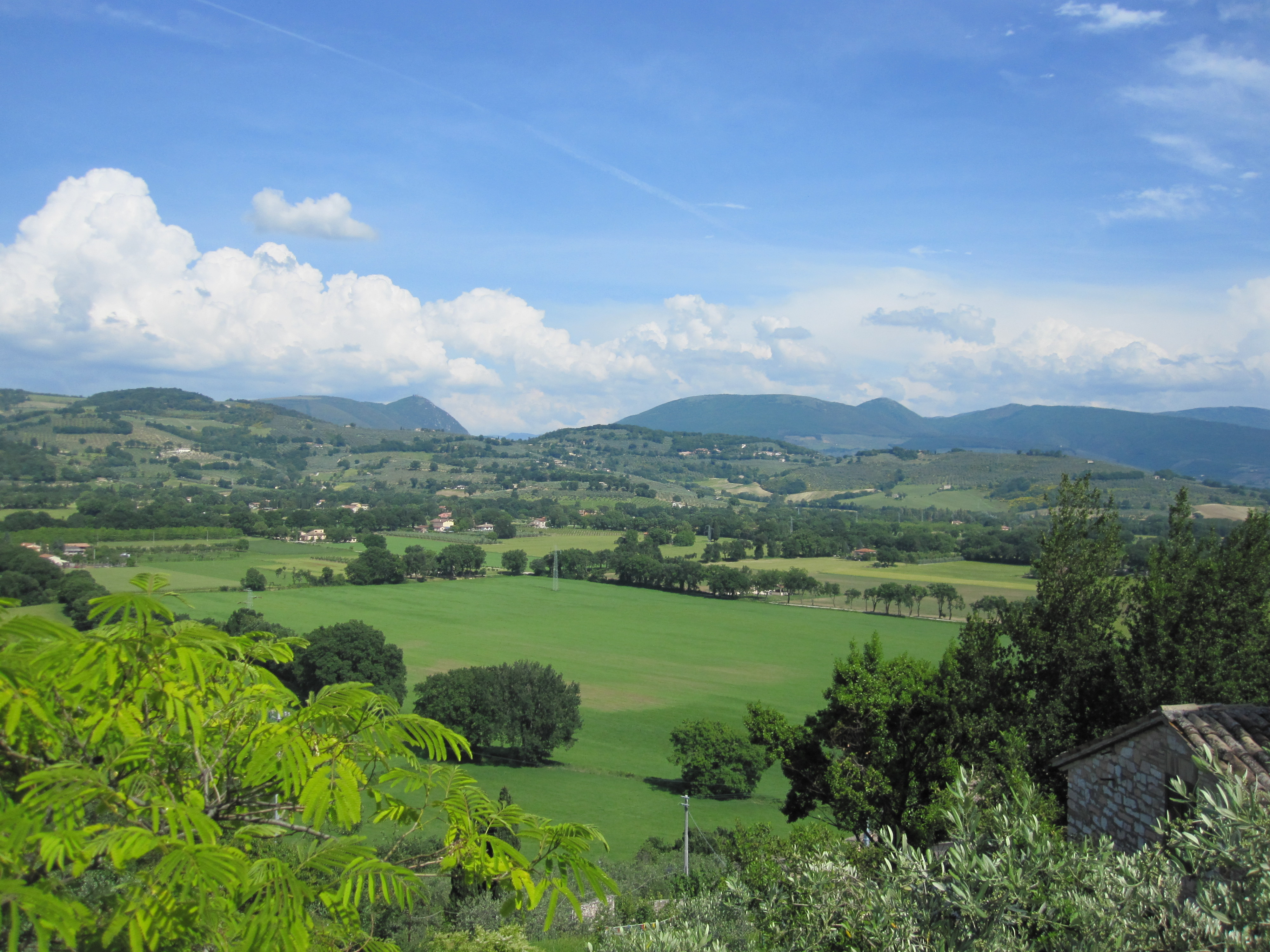
Bevagna (the city we visited earlier in the week, home to the Nocineria and Bottega Assu, was the second town on the Flaminia Road built after Spello and as such is considered a Roman town while Montefalco, built later in the Middle Ages, is from that time period.  Annalita described Montefalco as the “Balcony of Umbria” and spectacular views can be seen from all angles along the ramparts of this walled in town.

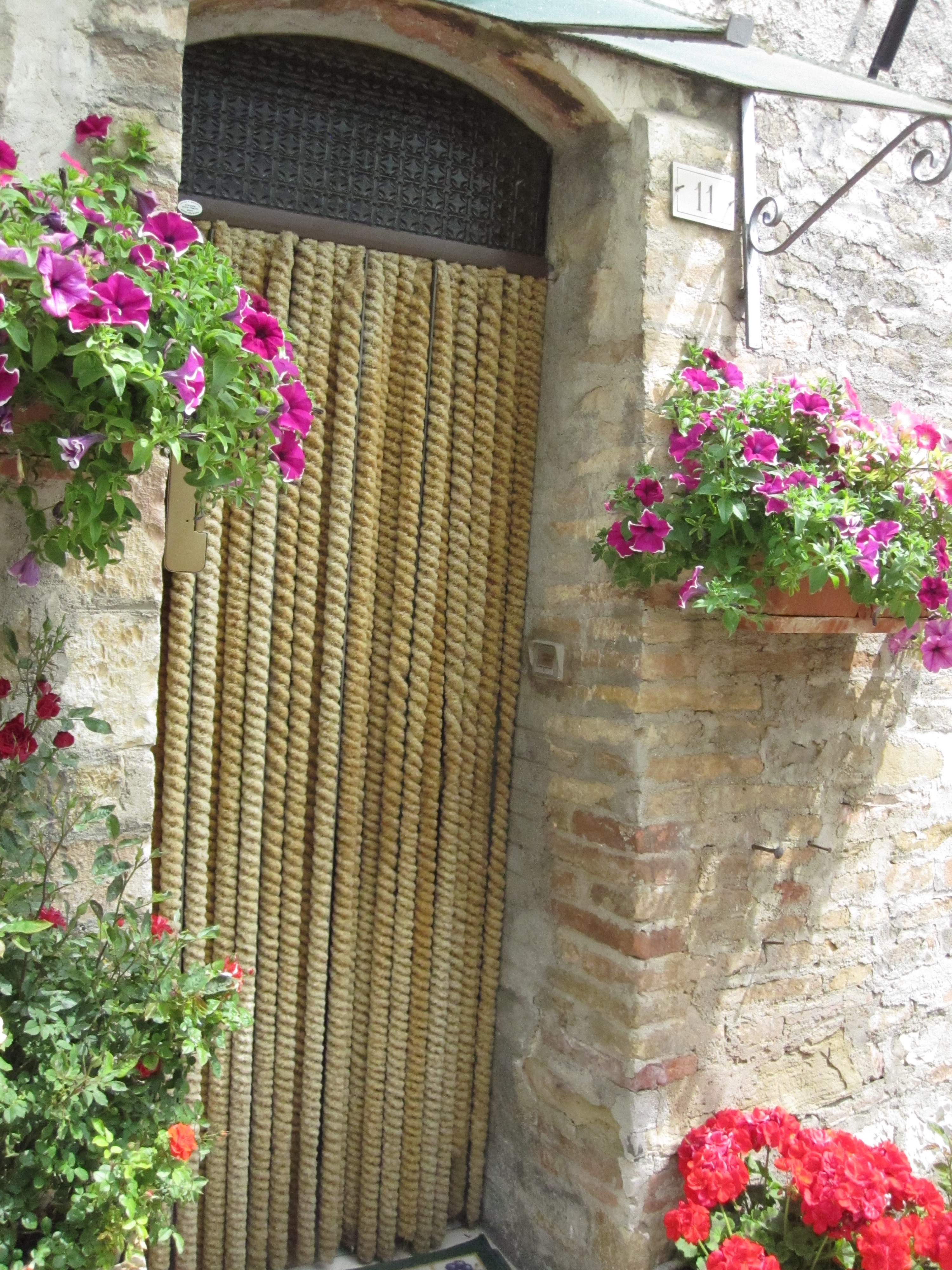
We got to town around 10 and the museum opened around 10:30 (i.e. 10:45 Italian time, add 15 minutes) so we grabbed an espresso and sat in the town square (unusual for a town square since it is round!) to see what life is like in the town on a Sunday morning. In fact it was rather quiet, but the coffees were great (four espressos and a plate of Italian style cookies for less than 4 Euros).  Then off to the 14th century church of St. Francis (San Francesco) where you can see the amazing frescoes painted by Benozzo Gozzoli as well as the “Nativity” by Perugino.  Apparently this cycle of frescoes was comparable only to Assisi but contains twelve images only.  The colors of these frescoes are really amazing and some criticize their restoration saying that they cleaned them too much and that the green colors are exaggerated, but the impact is significant.  Gozzoli was painting these in a much different style than the frescoes painted at the Basilica of St. Francis and so the figures are much more attractive and often blond and fair skinned which was the trend at the time.  The museum that houses these gorgeous paintings also houses the ancient monk’s wine cellar with channels cut into the stone to catch the wine as it comes out of the presses and collect it into a trough.  We strolled through the medieval town noticing the incredible pride people have in their flower pots that surround the entryways of their homes.


Off it was to Bevagna, where the two Roman churches face each other across the square.  Bevagna was a border town between the empire and the papacy and as such there are thirty-five churches within the town walls.  While the population has grown to 5,000 the space within the town has not really expanded, so these churches have been reused as supermarkets and cinemas over the years.  The church of San Silvestro built in 1197 was consecrated at the time by an emperor, which was a challenge and an insult to the papacy, so they basically abandoned it and used it as storage.  This luckily means that it is in very good condition.  It also features very unique architecture thought to be brought by the Benedictines as they travelled on their pilgrimages.

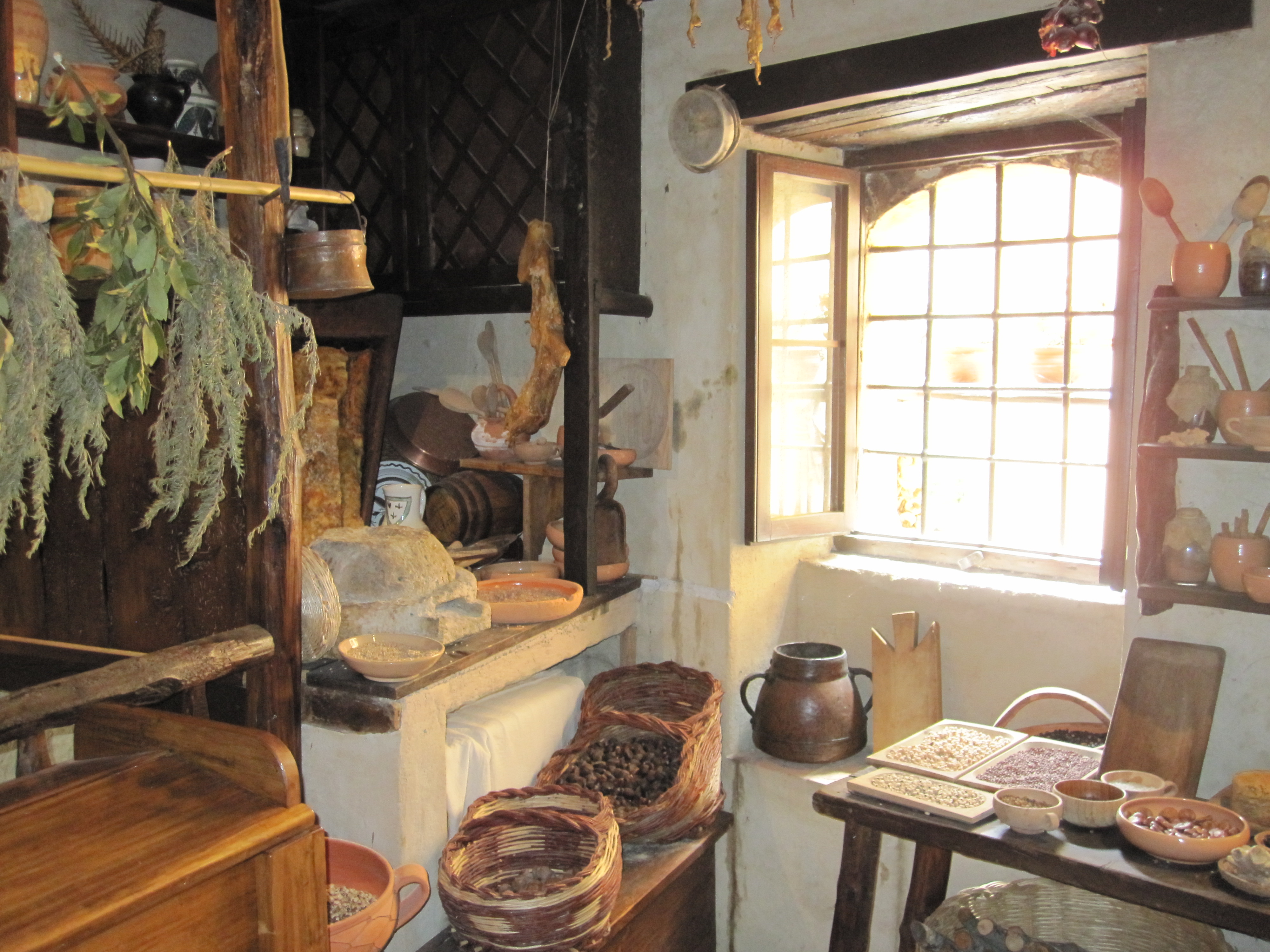
The area of Bevagna is fortunate to be at the confluence of multiple rivers and was able to sell their production of hemp, eggs, and bricks to neighboring towns.  Within the town there is an amazing excavation of the Coliseum area.  This former stadium was in ancient times closed and divided and turned into what we would today call work lofts, craftsman’s shops on the ground floor and living quarters above where they were safer from attack.  We visited this Casa Medioevalle with our guide Annalita who helped restore one of these ancient work residences with a friend.  Amazingly they have recreated a water wheel machine that would have either pounded materials to make mortar, felt or paper or run a wheel that would grind flour or olive oil (here the machine does both just to show us, but this would not have been the case back then).  Upstairs you can visit a traditional Roman home where the kitchen it attached to the rest of the room in order to conserve heat.  Hearty stews were made with small pieces of lard that hung from the rafters, in fact everything was hung, meats, cheeses, etc.  Bedrooms were painted bright colors in the spring since throughout the whole winter they burned animal fats for warmth, you can imagine the smell, and most had tuberculosis so they actually had a tiny bed where they slept sitting upright in order to prevent suffocation.  These structures actually date back to the 2nd century AD, it was really interesting to try to imagine life back then.

After our tours it was off to a picnic at Arnaldo Caprai to celebrate the day of Cantine Aperte for Umbria (May 30, 2010)www.movimentoturismovinoit  The winery was bustling with lots of people there to taste and eat and overall the crowd was very young and seemed very excited to be there.  It apparently happens around Italy offering a chance for tasters to visit wineries for the day.  We enjoyed some amazing super fresh mozzarella, like Burrata, but small, super orange and sweet yet firm melon and some amazing prosciutto.  Lunch was of course a repeat of these items plus a pasta with tomato and chicken livers, super al dente in texture and delicious, then grilled local lamb and sausages from Bevagna, and Chianina beef.  We tried some of the experimental trials at the winery, a Syrah, Petit Verdot and Tannat, all 100% and all really amazing.  I was a real fan of the Petit Verdot which although tannic was really delicious and not as herbaceous as you might imagine.

Lunch was followed by a jaunt through the vineyards, and then some time spent relaxing and investigating the local style as we spent some time watching the attendees and enjoying some Grecante.   Arnaldo Caprai winery also hosted a jazz concert with Marco Marconi which was a great endcap to the day as the sun set behind us.  A quick saber of some Billecart Salmon by Marco and then our journey was basically, and sadly, over.  We had a quick bite in Foligno and an interesting beer (!) called 32 Audace and now it’s off to the airport for the grueling journey home.

Hotel Villa dei Platani Viale Mezzetti, 29- 06034 Foligno 39 0742 355839 f 39 3281654025

Bottega di Assu Via Gabriele Crescimbeni, 3- 06031 Bevagna, 39 0742 360059

Arnaldo Caprai Loc. Torre- 06036 Montefalco 39 0742 378802 http://www.arnaldocaprai.it, imported by Folio Fine Wine Partners http://www.foliowine.com

Transportation in Umbria: http://www.Autonoleggio-Umbria.it Gianni 347 3236404


Journey to Italy Day Five: Perugia, Assisi and Montefalco

30 05 2010

A leisurely morning was spent at the hotel before we embarked to Perugia and met up with a tour guide who showed us the local sights there.  Sylvia, our guide showed us the sites and commented on the town that benefited from their proximity to the Flaminia Road, a Roman road and major connector between the Tyrrhenian Sea and the Adriatic over the Apennine mountains.  A unique sight within the town is a gorgeous fountain with carvings that depict the daily life of man at the base of the fountain.  To represent each month of the year there is a carving showing the activities such as pruning vines and tending sheep along to more intellectual pursuits towards the end of the year.  The idea is that over the course of the year through daily life humans move from action to intellect and eventually to spiritual enlightenment represented by the more saintly beings at the next level of the fountain.   The town church is modest compared to richer towns, with only faux marble columns and their one relic is the ring said to be that given from Joseph to Mary.  The town was so lacking in relics back in the day that they tried to actually steal the bodies of St. Francis of Assisi and St. Clare, but were unsuccessful.  Apparently relics were vital as they were a source of tourism, so without them your town suffered.

Perugia was a source of some of the best painters in Italy as home to both Perugino, Raphael and Pinturrichio.  The history of the town is rather violent as f conflict between the popes and emperor creating a great deal of turmoil over its history.  One leading family of the town, the Baglioni.  The Baglione family lived in this town but opposed the pope and as such he destroyed the towers that housed their family.  In its place a fortress was built where he sent delegates to control the town, but of course the locals of Perugia hated this as it was an insult and eventually also destroyed most of the fortress and in the process destroying much of their history.  We were shown the ruins of the ancient town that lie under the Piazza Italia as well as the escape route these delegates would take to leave town.  The weirdest thing is that you reach these ruins through a series of escalators, it feels like you are going into the NY Subway, but you are surrounded by ancient stonework.  Nowadays this leads to the underground parking structure (weird!).  One of the folks in our group got her dress caught in the escalator and luckily survived unscathed, but we joked that maybe this was the miracle the town was waiting for and she should sell them the pink shroud of life as their new relic.  We left the town hearing nothing about the chocolates that are named for the town but someone did ask Sylvia about the “Baci” made by Perugino, she said that basically the Baci was a great marketing idea since they used to call the little chocolates “fists”.  Really?

Off we headed for a quick jaunt to Assisi.  I could have stayed in that town all day.  While it seems a bit touristy it was really amazing to see all the incredibly narrow streets running throughout the town.  Our van driver expertly navigated some really tight turns, I wouldn’t even drive a Smart car through this town, it was crazy tight.  We visited the main Roman square where columns of the Minerva temple still sit.  Built in about 100 BC this site has always been a religious site despite the fact that the religion changed over time.  The city of Assisi was a bit smarter than Perugia and never adversarial towards Rome, which means that much of it is preserved.  This square also housed the market and the old metal measures used for silk and bricks can be seen on the wall next to the temple.  Assisi is famous of course for St. Francis, and also St. Clare, and the whole town’s names really resonate to me considering I am so familiar with California and the names of cities inspired by these saints, San Francisco, Santa Clara and even Los Angeles named for the church where Assisi found his inspiration, Santa Maria dei Angeli.  St. Francis was born at the end of the 12th century to an upper class family.  He had an easy life and was given the benefits of education and financial comfort.  He determined that he wanted to go to war at the age of 19 but was captured and imprisoned and his father bailed him out.  Then he decided to follow the Crusades, but got ill not far from home and again had to regroup.  It was at this time that he discovered his path and decided to live by the Gospel.  He had the benefit of being able to address the nobles as well as all levels of society and received entree to talk with the Pope due to his status.  The Pope was being challenged by the Emperor at the time and so the new Franciscan movement that St. Francis proposed seemed like a good option so he actually gave it his blessing.  The tenets of the religion 1. Poverty 2. Chastity and 3. Obedience to the Church, the last two are the longer lasting ideals…  St. Francis was of course also famous for his respect for animals and the environment, he spoke to all creatures calling them all brothers and sisters.  The Basilica of St. Francis is pretty incredible.  The top story is where the public would attend mass, the next level down you find a more spiritual chapel and at the bottom level is the area in which St. Francis is interred.  You can make an offering an buy a candle to be burned at a later time.  It was really moving.  Amazing also to think that here is the birthplace of a religion that ultimately spread across the world and brought winemaking to California with the Franciscan missionaries.  While they were apparently from Spain they evolved from the teachings of St. Francis, and as our guide said, really a missionary has no home but the figurative home of the church.

Off we went to lunch at Hotel La Bastiglia in Spello, a gorgeous restaurant with an incredible view where we dined on a panzanella salad, fresh ricotta, free range pork prosciutto, herbed pecorino cheese and those were just the starters!  I am getting used to this.  These were of course followed by Tagliatelle with Chianina beef as well as a “mixed grill” of pork, beef and sausage.  Just when I thought I could take no more in comes a molten chocolate cake that was incredibly decadent with strawberry sorbet.  We also met Marco’s amazing family including Arnaldo Caprai, he seems ready to take over now…

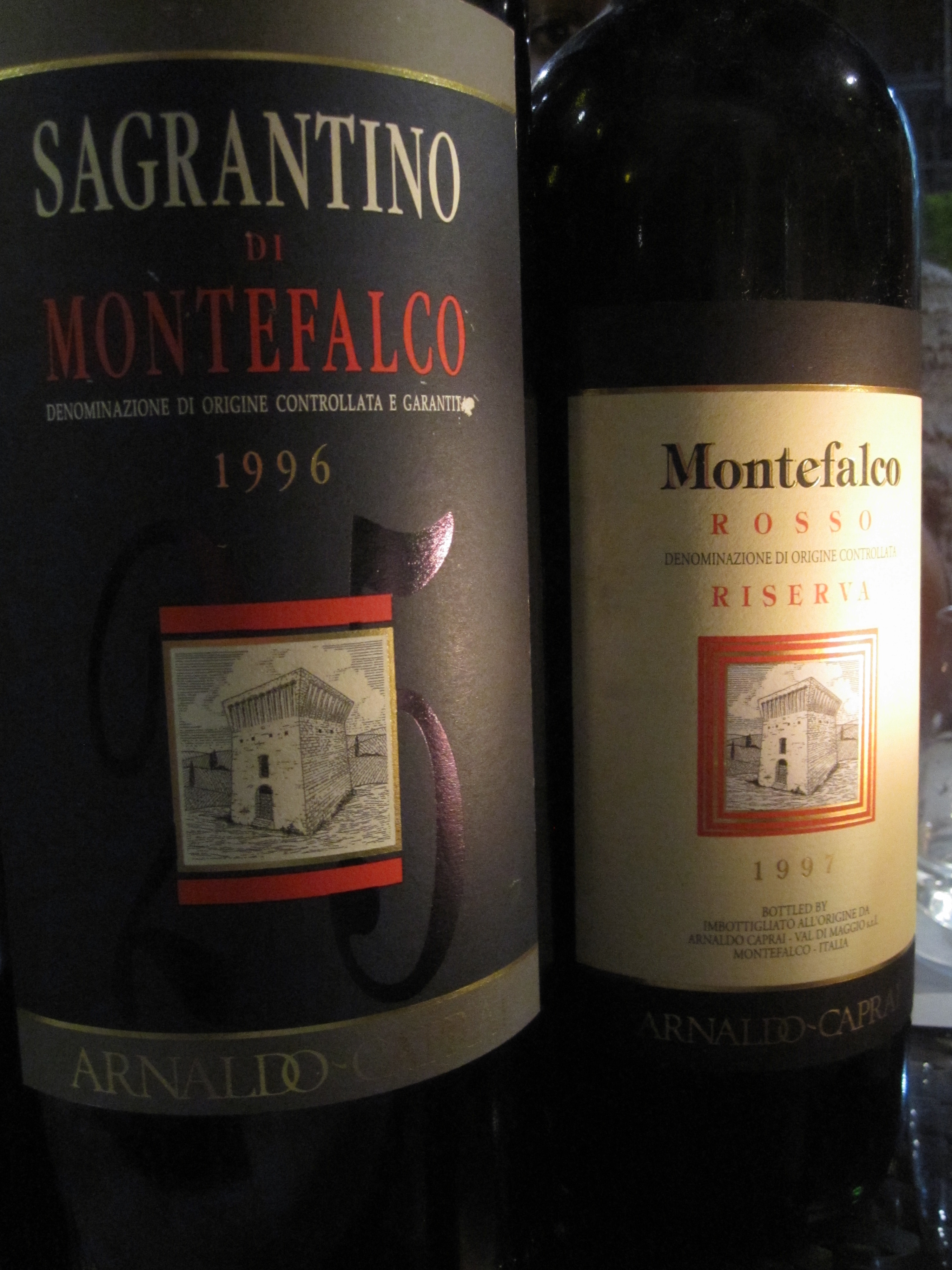
A quick jaunt through our local town of Foligno and a 20 minute power nap and it was back to work at Arnaldo Caprai where Paolo Biccheri led through a tasting of Montefalco Rosso and Sagrantino de Montefalco from numerous local producers.  My highlights were Tabarrini and of course Arnaldo Caprai.  Then we tasted seven of the latest new wines from Arnaldo Caprai and were met with a gorgeous sunset over the vineyards while we discussed their latest clonal trials.  They are working both with the traditional propagation of Sagrantino as well as using seeds to breed new clones in order to get the best vine material possible.

We headed off to the gorgeous town of Montefalco as the bats were coming out and the sky was a deep indigo and were greeted by Sylvia Santificetur and her husband Achille, who just happen to be parents of Maria Assunta’s grandson, the couple we met at lunch the day before.  They own Spiritodivino, a gorgeous restaurant that has been getting incredible press lately http://www.spiritodivino.net.  It was another one of those nights when the food and company were so wonderful it was hard to take notes, but highlights were an artichoke served with cauliflower puree and a poached egg as well as a 1996 Sagrantino de Montefalco.

Now it’s off to Montefalco and back to Bevagna for a tour and then onto the winery where they are having an open house and concert!


Journey to Italy Day Four: Umbria

28 05 2010

May 28, 2010

After some early morning blogging we headed off to Umbria in our “van”, a quick hour and fifteen minutes or so and arrived at the Hotel Villa dei Platani in Foligno http://www.villadeiplatani.com/it/camere_en.php, a really beautiful villa on the outside with swanky and trendy room furnishings inside.  Just about as different as you can get from the Grand Hotel Villa Medici, you could tell right away by the fancy lamp and very different fruit plate.

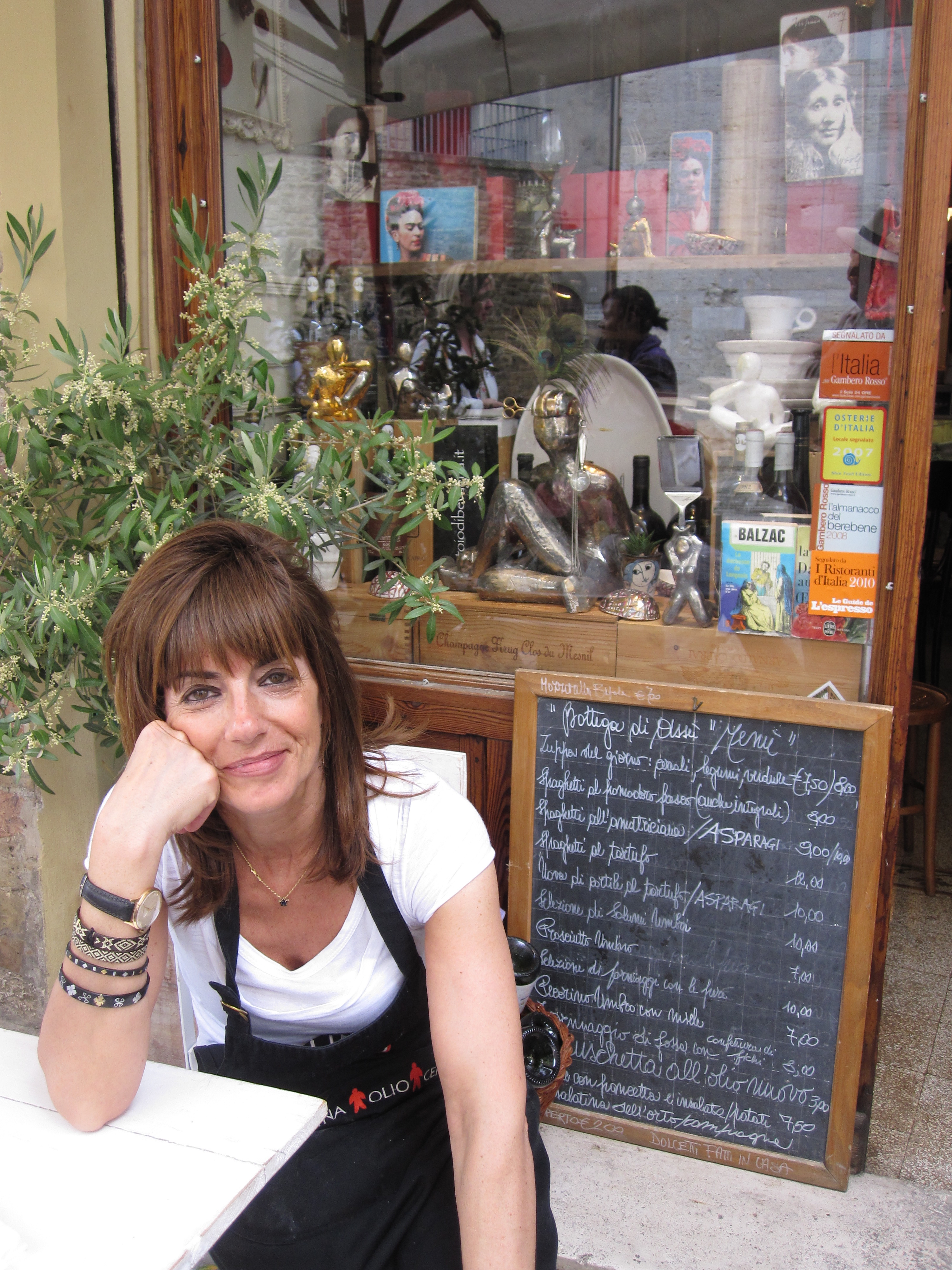
After a quick email check we headed out to meet Marco Caprai, son of Arnaldo Caprai in the nearby town of Bevagna.  This quaint Roman town is said to be the unique due to the two churches built facing each other, the first unfinished.  When we were greeted by Marco Caprai he told use we were going to go on a quick walk to get an aperitif, which of course doesn’t sound too bad after a long trip, but imagine my surprise and delight when I discovered that this “aperitif” was pork based!  On the way I could not help but notice a gorgeous little bottega with photos of Frida Kahlo in the window, luckily I saw Marco greet the owner so I anticipated our return.

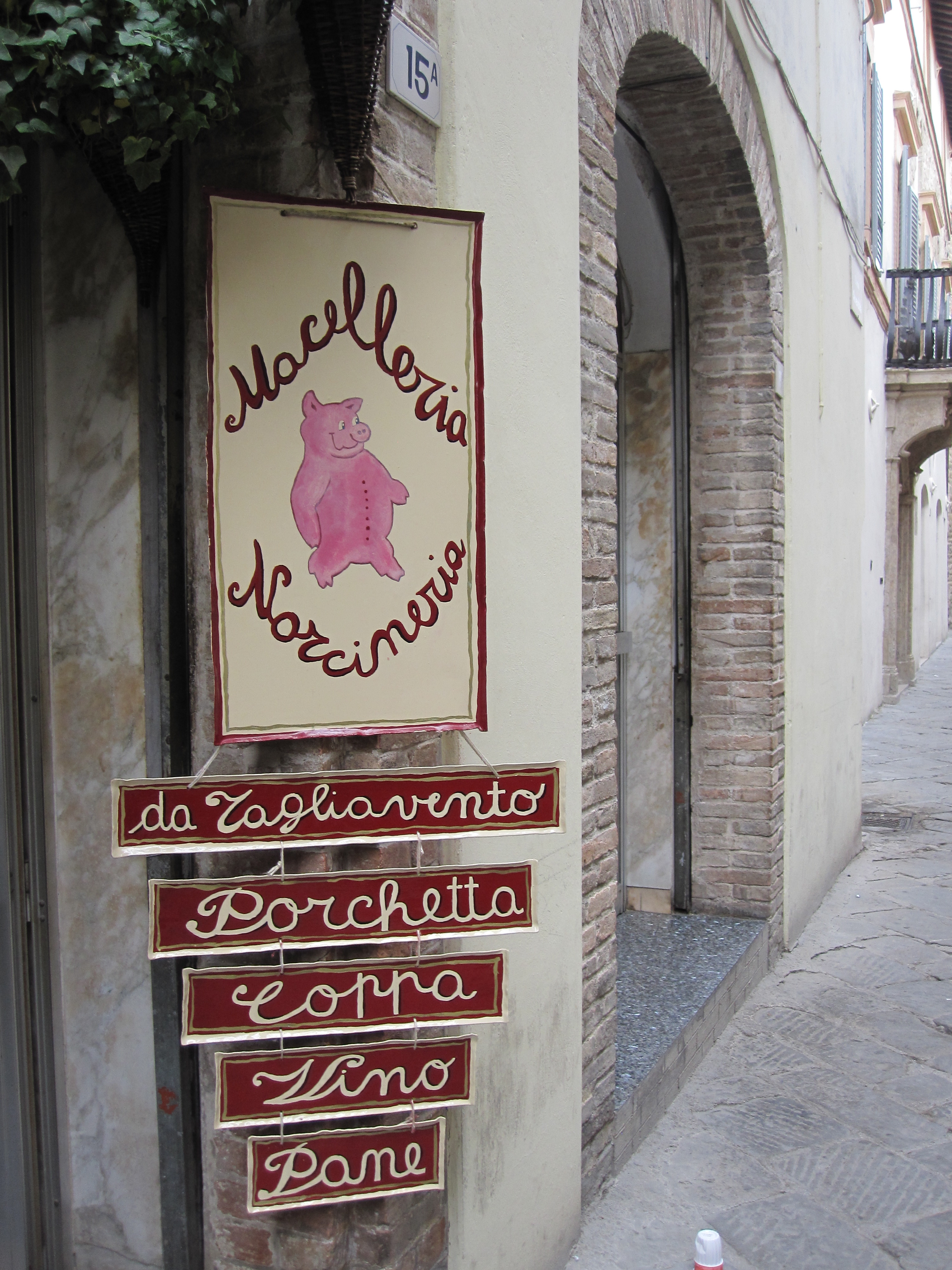
I could tell the minute I saw the Nocineria (place where they sell “carne suina”, i.e. pigs) that I would love it because of my love of everything swine…

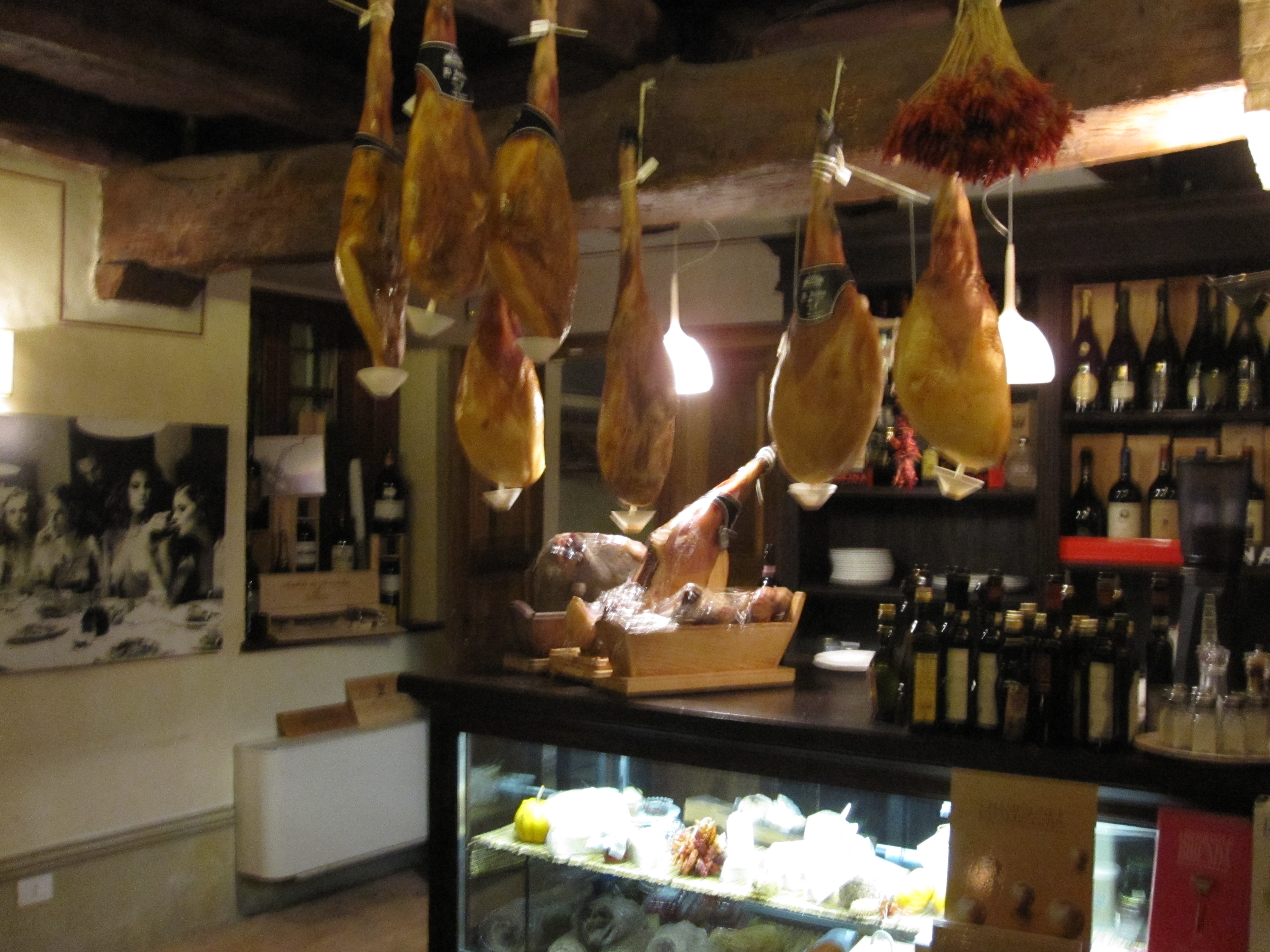
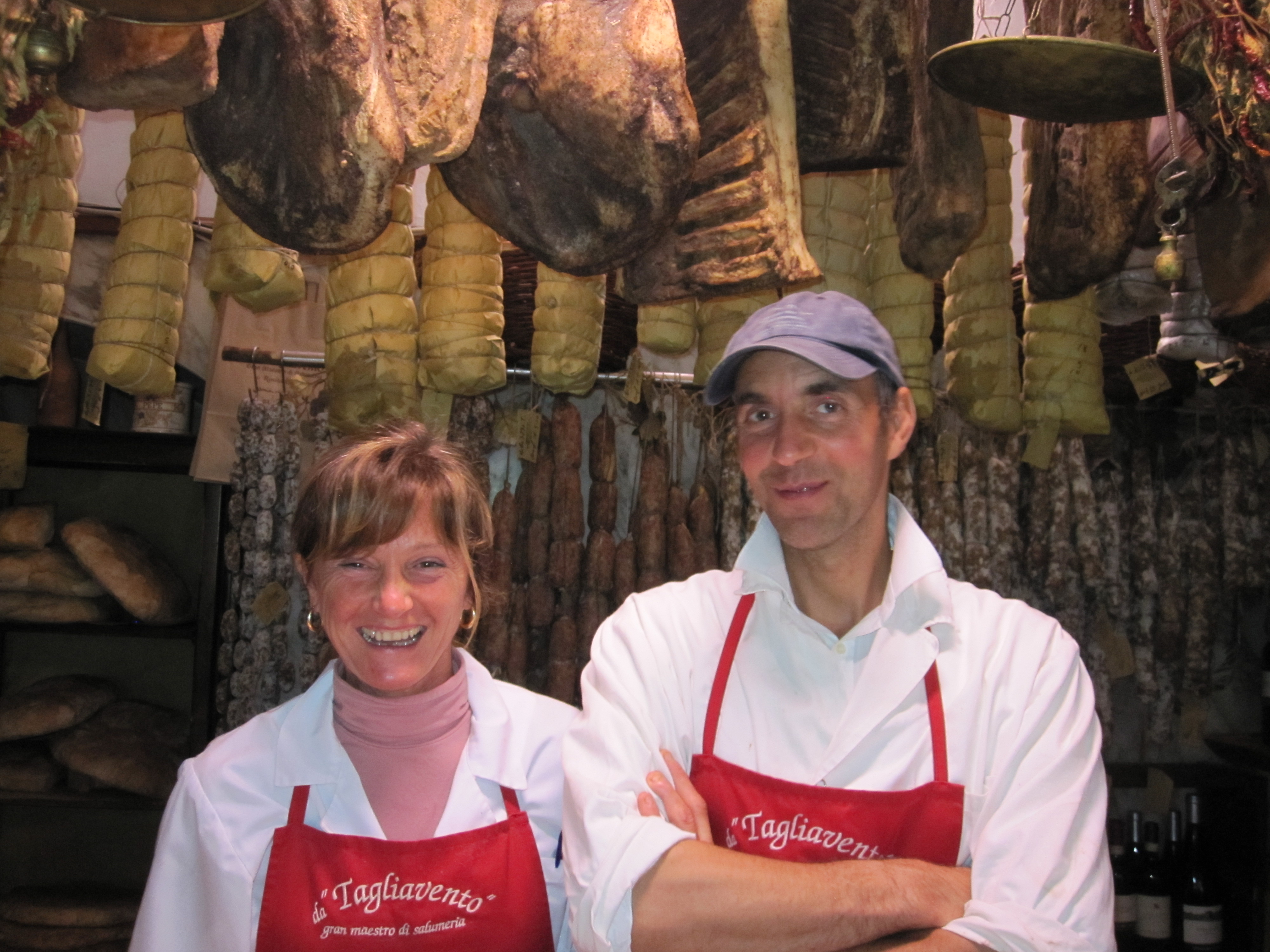
We entered and our senses were overtaken by the rich smell of all the hanging meats.  I was of course in hog heaven.  We were treated by a selection of items, Pancetta made from a slab of the pig that is salted and then rolled and wrapped in paper and hung to age, Lonza, the loin of the animal, Ciauscolo which is a fattier sausage, Porchetta, and my all time favorite, a dry salsiccia aged with Montefalco wine that had a much harder and chewier consistency and incredible flavor.  Owner Rosita Cariani is a fourth generation producer of these products while her partner whose name I did not catch is only third generation, so basically it seems that she is the boss of the place.  They noticed how excited we all were to taste and so they sliced thinly some Coppa di Testa, basically a head cheese usually made in winter that includes all parts of the animal, the guanciale (cheeks), head, gelatin, etc. along with garlic, orange rind, lemon rind and nutmeg.  They were sure to come out and show us the type of garlic, red garlic, which seemed to be very important to the production of this product.  It had a melt in the mouth texture and was just delicious, I think the reason I haven’t enjoyed many head cheeses in the past is the chunky fatty globules that don’t seem quite appetizing, but this texture was just perfect.  We ended it off with a well-aged pecorino, a sheep’s milk cheese aged and rubbed with olive oil.  And of course we had to accompany this with some Arnaldo Caprai Grecante.  The reception at this wonderful Nocineria was so warm and friendly, with that the wine and cheese and these amazing meats I would have been happy to stay there all day.  They also sold fresh cuts of Chianina beef and the local specialty, lamb.  When we shook hands I could not help but notice and feel comforted by the super soft buttery feel of these hands that not only butcher, but craft such exquisite and time honored recipes.  I have always loved salumi, but lately in San Francisco it has seemed overdone, but now I really understand the passion that is imbued in those who have visited an authentic Nocineria and understand their quest to emulate such a place.  It was truly magical.  And I was so proud to be wearing the jacket from my friend Stephen Gerike of the National Pork Board that features his own farm’s logo, Boris Max.  If you visit the store is called “Da Tagliavento”, Gran Maestro di Salumeria, Corso Amendola, 15/a Bevagna.

coppa di testa

Sad to leave the Nocineria, we stepped out to find that school had just gotten out for lunch break and little children were walking through the town excited to go and join their families for lunch.  This town of about 5000 inhabitants still operates much like it did in ancient times, and it was refreshing to see that this culture is still strong in Italy.  We headed over to La Bottega di Assu, the restaurant I had seen on the way in.

Upon entering you immediately notice the organized chaos of the place.  It is tiny with only about maybe 10 seats at three tables.  We combined two tables and began to admire the charm of Maria Assunta, the proprietor (Assu is her nickname) and the incredible surroundings.  Marco explained that this spot is the place to be in town, famous for local Umbrian dishes, wines, but also sort of a mecca of culture.  Stacks and stacks of books line the shelves as they intermingle with the bottles.  Under the bar that hosts black truffles, bread and prosciutto you find boxes of pasta and ceramic ware.  And the left wall is covered with a scrapbook of photographs of Maria and her family, including the apple of her eye, her 9 month old grandson, who also made an appearance during lunch when his mother and father came in to help with the lunch rush (there are also four outdoor tables).  The eye darts from photo to photo and book to book while Maria carves some prosciutto and serves water, some Franciacorta and hearty wheat bread.  Those that have seen my house  and office will understand how comforting that type of controlled chaos is to me, but it is clear that everything also has its place.  When we asked about some of the photos of the family she grabbed a book, seemingly at random, and pulled out a photo of her mother in 1955, pregnant with her.  Then she ran off to continue to cook, and I carefully filed said photo back in the book and replaced it.  The tables are complete with flowers and colored pencils in case you get the urge to draw, which I did, and music fills the air.  We had a simple local specialty, basically bruschetta or grilled bread doused in olive oil and nothing else.  Marco explained that the locals did not use salt in their bread because the popes started taxing salt, so salt was very valuable and they saved it for the salumi (which I thought was very reasonable).  We enjoyed a very nice panzanella salad with fresh mozzarella, lots of olive oil, tomatoes, olives, red peppers and celery, and then Marco tempted (and dared?) us to have a “little” bit of pasta which we enjoyed with guanciale (cured pork cheeks, kind of like a fresher version of bacon).  Maria zipped around and expertly served the table, throwing in a few comments here and there and when I expect I looked like I was about to burst she jokingly wafted a plate that was headed outside in front of my nose, teasing that it was coming my way.  Her smile and vibrant personality was both infectious and addictive.  I really felt like I had walked into an Italian version of the movie Chocolat, she could have easily inspired such a story.  From her photos you can tell that she has a mischievous streak and the glimmer in her eye just shows her zeal for what she does.  Another amazing meal.  We enjoyed Marco Caprai Montefalco Rosso Riserva with lunch, and I was not taking notes so I do not even know what vintage it was.  I do know that we had about four bottles amongst seven of us (it was one of those the wine just keeps coming deals) and we left the lunch happy and fulfilled.  We chatted outside with a bunch of folks, some from Memphis, some from Pennsylvania, the gentleman had just run into a former student.  It was like this place had a magnetic vibe to it.  Just an amazing time.

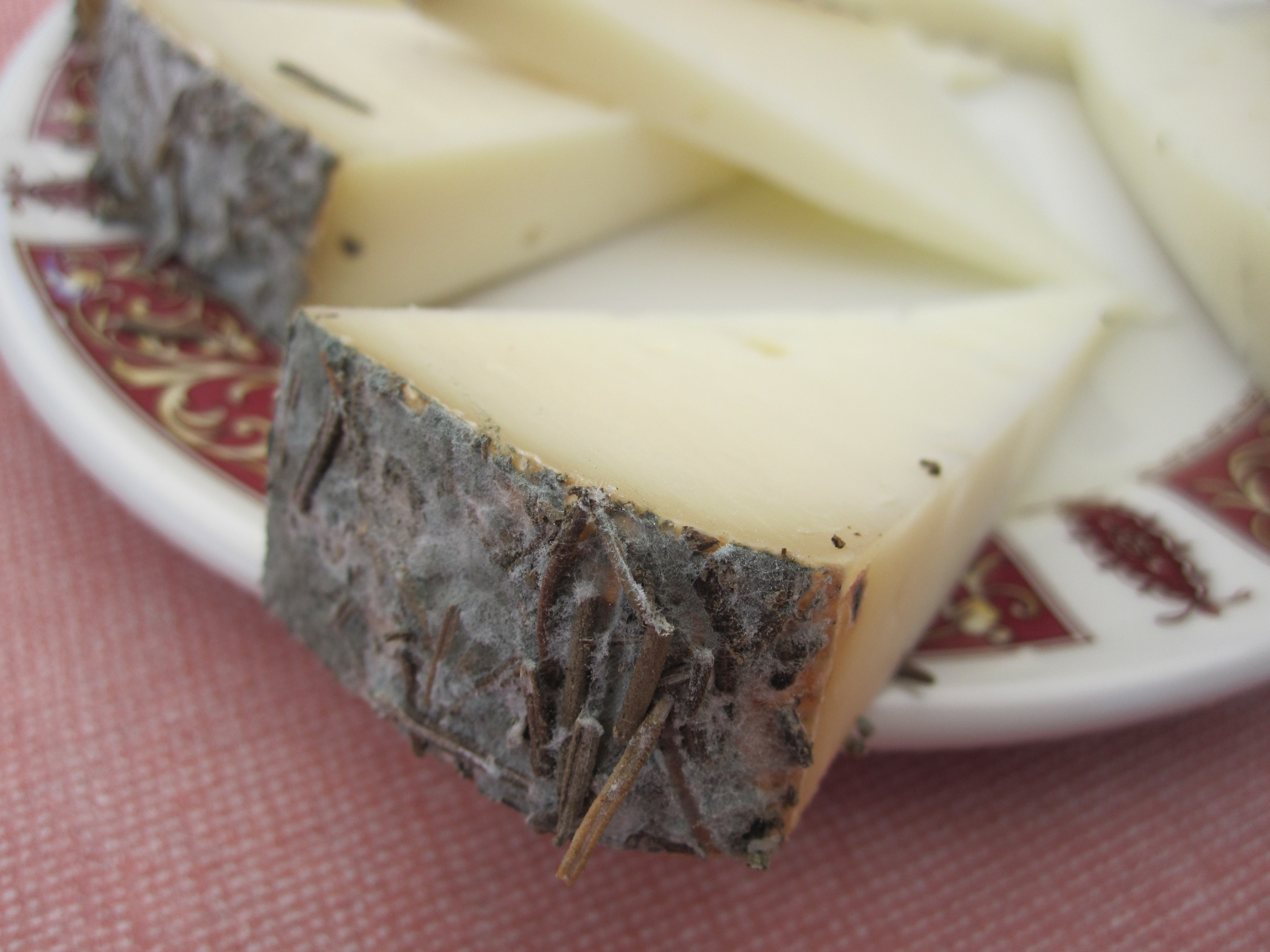
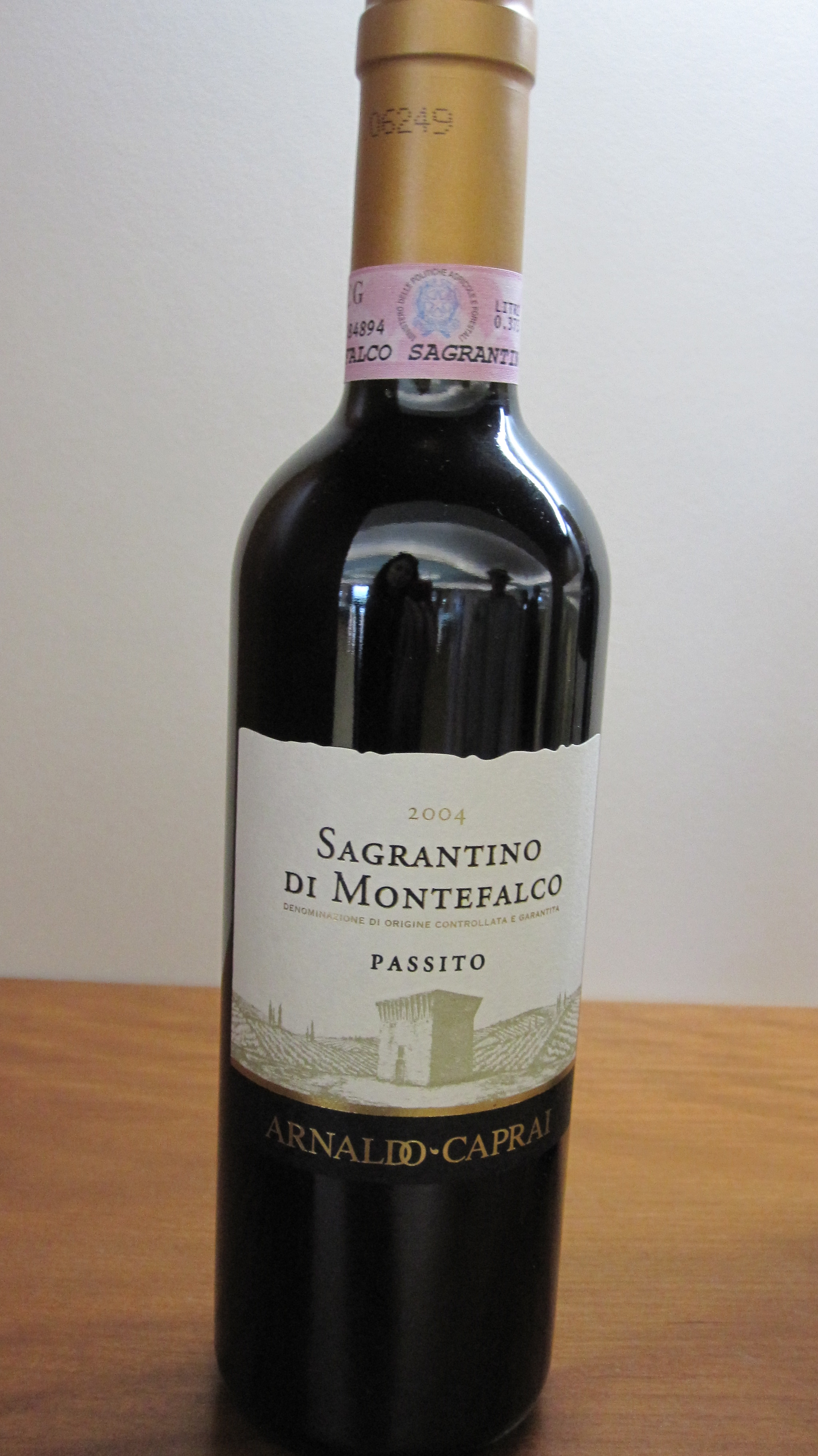
So off we went, fat and happy, to Arnaldo Caprai.  Boasting a very slick tasting room the place has a stunning view.  We were treated to a tour of the vineyards where experiments are being conducted on various vine trellising systems.  Of course we then enjoyed a tasting of their wines.  Two whites, Anima Umbria Grechetto IGT 2009 and Grecante 2009, followed by a red Anima Umbria Rosso 2007 made from Sangiovese (85%) and Canaiolo (15%) before we were presented with the blockbusters.  Montefalco Rosso 2007 was a mix of 70% Sangiovese and 15% Sagrantino a really chewy rich wine with great balance but a large expression of concentrated fruit.  This was followed by the Montefalco Rosso Riserva 2005, super dense deep and earthy with gum gripping tannins but this was no match for the Sagrantino di Montefalco Collepiano and the Sagrantino di Montefalco 25 Anni.  These wines are MASSIVE.  Full of tannin that takes over your entire mouth and won’t let go.  Tasting them without food was tough but luckily later in the evening we had the chance to taste older vintages with dinner, only then can you truly understand the purpose of these wines that adeptly navigate the rich Umbrian cuisine.  We finished the tasting with Sagrantino di Montefalco Passito 2006, a dried grape wine that is really intense.  Both sweet and still very high in tannins I could not imagine what pairing would match it.  Marco suggested it was a little wine to “drink alone during the day.”  But he also suggested it was great with dessert.  I thought perhaps cheese and luckily he wanted to prove me wrong which he did by bringing out some 12 month old Pecorino and a 36 year old Parmeggiano (I was happy to admit my error in the pairing but the cheese was amazing.)  He said that cheesemonger has a limited number of molds so the cheese is very hard to get.

We finished up and after a quick nap at the hotel it was back to eating.  We arrived at the beautiful Villa Roncalli where chef Maria Louisa created an exceptional meal for us.  We drank the Arnaldo Caprai Nero Outsider, a lush expression of Pinot Noir with an amazing Chianina meatball with capers and shaved parmesan on super fresh lettuce.  Monkfish with tiny slivers of zucchini and fried squash blossoms with Arnaldo Caprai Montefalco Rosso Riserva 1998 was amazing, but the Farro soup with many drizzles of olive oil and ricotta ravioli stole the show along with the Arnaldo Caprai Sagrantino di Montefalco 1997.  This was where it became evident that although the soup was super rich the wine just lifted it and made the meal work.  Amazing that such a huge wine could be a delicate foil for a rich dish, but the tannins wafted away and you found that you could not help but drink the wine, food, wine, food, wine, bite, sip, bite, sip, the way it was intended.  Pigeon was served with a thick noodle and then a lamb (I got the shank) but by that time I was done.  Until of course we were presented with more Sagrantino di Montefalco passito with one of the best desserts I have ever had, pears delicately poached with a semolina type cobbler type thing on them sitting in a bed of zabbaglione served with what to me tasted like an eggnog type ice cream, no doubt just a rich egg base with some nutmeg.  And just like Marco said, it was incredible with the passito, amazing!  To top off the evening their dog came by to say goodnight and we retired back to the hotel where I slept like a log.

Today it’s off to Assisi, Perugia and Spello!


Journey to Italy Day Three Continued: Florence

27 05 2010

May 27, 2010 continued

So despite a lack of sleep I managed to get up on time and head off to meet the rest of our group at breakfast at about 8am and then head along in a Mercedes Benz “van” if you could call it that to Chianti Rufina.  There is a lot of diversity within what the consumer may just know as “Chianti” and Chianti has very little to do with the fiasco, or the woven bottle that you would put a colorful candle into.  The wines of Chianti have always had renown, partially due to the fact that this Tuscan wine growing area is very close to Florence, a major area for banking and a traditionally wealthy city.  Chianti Classico, the original area and a separate DOCG, is just one of multiple Chianti regions, for example Chianti Colli Senese (the area near Siena), Chianti Fiorentini (on the hills near Florence) and Chianti Rufina, not to be confused with the brand named Ruffino which is a totally separate thing.  Maybe I am tired…  It’s really not that confusing, it’s just that each of these regions has different characteristics that make the wines taste different so they are kept separate, the concept the French call “terroir”.  We headed out to Rufina which was an easy 30 km drive northeast of Florence, to Castello di Nipozzano which passed hands in 1877 to the noble family of Frescobaldi when Angelo de Frescobaldi wed Leonia Albizi.

First we visited the famed estate vineyards that range in altitude from the Arno River at 250 meters in elevation to the crest of the hill at 500m.  Soils change as you get futher from the river with sand close to the river, ideal for Cabernet Sauvignon, calcareous clay mid-slope, great for Merlot and the famed soil of the area, galestro, a schistous compressed clay soil towards the higher elevations, ideal for the picky Sangiovese.

Sangiovese is a difficult grape to grow as many California producers have noticed, due to the fact that it has a lot of vigor, it grows and grows, so rocky soils with less nutrients are ideal for it.  These vineyards are at the foot of the Appenine Mountains that run down the spine of Italy from North to South offering cooling air at night to retain aromatics and finesse in the wines.  We met with winemaker Niccolo D’Afflitto at the vineyards and he also guided us through the cellar explaining how he keeps the pumpovers in the winery under close guard by keeping the system closed and only adding oxygen as needed to retain aromatics.  He said he does not ever want to walk into the winery and smell wine, he would rather save that beautiful smell for the consumer when they open the bottle to enjoy it!
We entered the villa and were met by Leonardo Frescobaldi, the President and tasted through the Mormoreto 2006, 2007 and barrel samples of the 2008 and 2009.  The wines are a blend of Cabernet Sauvignon, Cabernet Franc, Merlot and Petit Verdot which seems strange until you learn that these grapes were grown on the property for ages.  Due to unfavorable relations between the Frescobaldi family and the Medici some Frescobaldis left Italy for a time and spent time in France.  One of these ancestors was famed for bringing back these grapes in the 1850s along with some Pinot Noir and Chardonnay now planted in the neighboring area of Pomino.  The Colors of the wines were intense hues of magenta and just as Niccolo had suggested the aromatics were astonishing.  Aromas of mulberry, blackcurrant, resinous herbs jump from the glass and despite the Bordeaux varieties have no resemblance to Bordeaux.  Lifted by vibrant acidity and balanced in their oakiness (the Marchesi de Frescobaldi says “If you like vanilla go buy a vanilla ice cream”) these are wines great for a meal.

We left our wines to open up with some more air and took our “van” up to the nearby estate Castello di Pomino.  This area used to be connected to the Chianti Rufina appellation but has no resemblance to it in either soil or climate.  Way back in 1715 it was demarcated as significant wine growing area, and in 1983 was separated from Chianti Rufina.  The Frescobaldi family are the largest landowners and producers in the region, so it is almost a monopole.

The minute you start winding up the hills to reach this region (a mere 15 minutes from Nipozzano) you feel like you are in a different country.  Leonardo Frescobaldi joked with us to be sure we had our passports!  It really did feel more like an alpine region as pines and different vegetation became visible.  Vineyards here sit at higher elevation, 400-750 meters, so different vines are at home here.  It is named after apples, grown here on the gravelly, acidic soils.  Of course with the different microclimate the grapes grown are also distinct including Chardonnay, Pinot Noir, Pinot Blanc, Riesling, Gewurztraminer and Moscato.

Most exciting for me was the Vin Santeria, or the room where Vin Santo is produced.  Here they take harvested Chardonnay and Trebbiano grape bunches and hang them from wooden rafters with hooks.  The grapes stay there for about three months, in the fall and winter and most importantly this room is up high and has windows that are opened to allow for breezes, always strong in Pomino, to dry the grapes and also prevent spoilage.  After pressing the juice is put into exile in barrels (Caratelli sigillati) 2/3 filled where it ferments slowly.  They close these barrels with wooden tops and try to forget about them for four or five years (they cannot reopen these to check on the wine.)  When they revisit the wine it has evolved into a coppery toned elixir that is sweet (180 g/l residual sugar) and luscious.  We tasted a Chardonnay that they oak and lees stir to produce Benefizio and also a Pinot Noir out of barrel that had a tart cherry nose and a concentrated core of fruit but was unique to Pinot Noir from other wine regions.

After visiting the newly restored chapel frescoes we jumped back into our “van” and zipped back to Nipozzano where we enjoyed lunch with Marchesi de Frescobaldi and Tiziana Frescobaldi Board Member and Director of Press Relations.  We enjoyed a ricotta puff pastry on a bed of spinach drizzled with pesto, which was perfect with the Pomino Benefizio 2007, Capellini pasta with a simple and delicious tomato basil sauce, with Nipozzano 2007 Chianti Rufina Riserva (90% Sangiovese with the traditional grapes completing the blend) and then a Gallentine en Pollo (stuffed chicken) with rosemary potatoes and cauliflower with Montesodi Riserva Chianti Rufina 2007 (100% Sangiovese).  We finished with an almond cake and Vin Santo.

After saying goodbye to the family we toured the old wine cellar where the family’s ration of wines are stored in anticipation of their use when they are born and then headed back to Florence.

Upon entering the hotel I was met with the effusive smell of jasmine, did a quick change into shorts and FitFlops and hit the city of Florence hard (I only had three hours).  I made a bee line to the Officina Profumo-Farmaceutica di Santa Maria Novella at 16 Via della Scala www.smnovella.com.   Santa Maria Novella is one of the oldest pharmacies in the world founded by Dominican friars after 1221 who made medications from the herbs grown in their gardens.  Amazingly it has been open to the public since 1612.  For anyone that loves perfume and scent this place is mecca.  When you open the doors you enter a marble corridor and are immediately greeted by an intriguing mix of aromatic essences all of which mingle into a unique scent reminiscent of light top notes of fields of flowers but also incense and heavier aromas.  The main room is gorgeous and impossible to capture on film despite the numerous tourists who are there trying.  It seems almost sacrilege to try to photograph this ancient site and the filtered light gives a very serene calm to the place.  Three rooms house the wares, one for the edible items, one for the home fragrances and accessories and the main room for the essential oils and perfume.  Scent strips are available and you can peruse the list in multiple languages and ask to smell anything you wish.

After enjoying Santa Maria Novella I hoofed around in search of leather goods and found them over at the boar where you can rub its snout.  I ended up walking all the way to Santa Croce and then walked across the Arno on the Ponte Vecchio, focal point of the city, over to Palazzo Pitti and Santo Spirito and then back across and yes, back to Santa Maria Novella to revisit an aroma and ultimately back to the hotel.

Dinner was at Cibreo where we were treated like royalty (I guess that is what happens when the Frescobaldi family makes your reservation).  Waiters here have no written menu but sit with your table for consultation, many extra dishes were brought to taste.  We drank Luce della Vite, a more modern style wine coming from the Montalcino area  and 2005 Mormoreto.  Dishes were too numerous to mention but the highlights included pickled carrots and zucchini, a flan with meat sauce and parmesan, spicy tomato aspic, a minestrone with amberjack (a fish) that was killer, and my entrée, rabbit in a dark chocolate sauce with spices including cumin and raw hazelnuts.  The dish was so intriguing and made me think of mole from Mexico.  It was truly delicious and made me wonder how these cultures melding created this dish that son of owner Fabio Picchi said has been passed down through his family for generations.

Overall it was a great day, fueled by adrenaline and vibrant sights and smells I never even lagged.  I tried to write when I returned to the room, but fell into a happy slumber and awoke this morning at about 5:25 eager to write and hearing all the glorious birdsong that’s just a bit different than that in the US.  Stepping onto the balcony I got a strong waft of the just extinguished waxy smell of the citronella candles on the cool morning breeze, kind of a mix of summer picnics and church.

Today we leave Florence and head to Umbria.

Cibreo Ristorante Via A. Del Verrocchio, 8 r Florence 055 234 11 00

http://www.frescobaldi.it

Santa Maria Novella Via della Scala, 16, Firenze http://www.smnovella.com