Bordeaux, Sans Jet Lag

15 06 2010

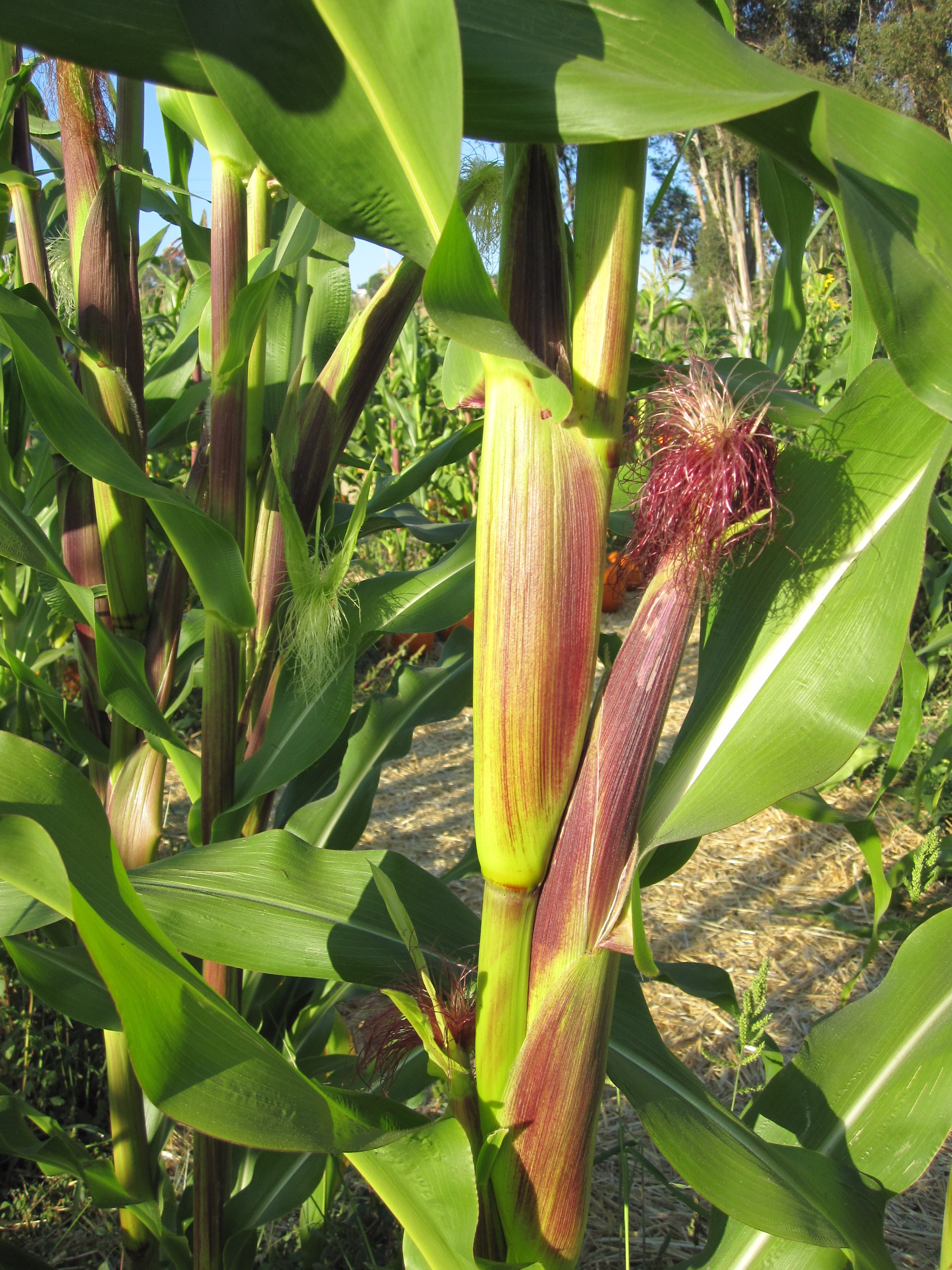
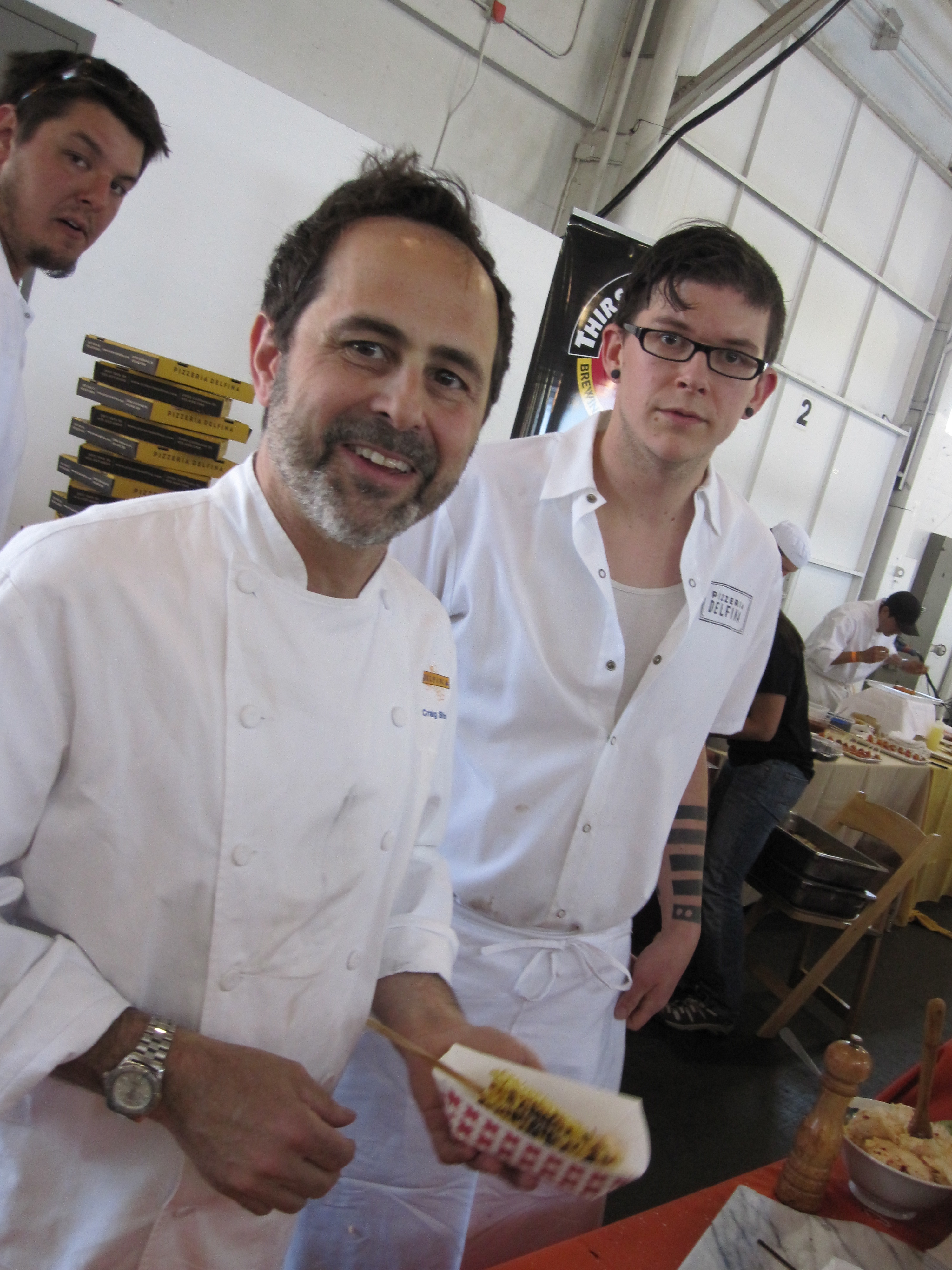
I should know better than to tempt fate, but it seems that I have eluded the evil jet lag once again (Why do I always want to spell it jet lague? Is that French? How the hell DO you spell it?) I should not speak too soon, but once again in rare Chapa fashion I headed out to France on minimal sleep, maybe this is a good strategy. I ran the Slow Food Golden Glass Wine Competition on Thursday which was a blast, the judges evaluated about 124 wines and selected some great winners, to be honest the overall quality of the wines was so high it was impossible for me to resist staying around with the volunteers and tasting as many as I could, winners or not! It was so fun to hang out, and we had a super fun group of volunteers, and one judge, so it was a blast. Then my husband and I and two of our esteemed judges headed over to Frances for an incredible meal, gnocchi with fresh spring vegetables, amazing chick pea fritters, calamari to die for, bacon beignets, it was all so amazing! Friday was spent racing around trying to finish up my videos for Le Wine Buff! Le Wine Buff is a project I am working on to promote the value driven wines of Bordeaux, we were sent wines and had to do videos tasting said wines with the public, it has been so fun! I actually opted to take my videos on the road and drove around some of my favorite nature sites, Ocean Beach, The Golden Gate Park Buffalo Paddock and Chain of Lakes, Baker Beach, etc. These will eventually be on http://www.enjoybordeaux.com. Between that and packing and prepping for the journey I ended up staying up all night, til 5 am Saturday morning which meant I had about 3 hours of sleep before I had to head out to the Slow Food Golden Glass event. Great wines were served and some of San Francisco’s “slowest” restaurants (restaurants that focus on respect for the environment as well as enjoyment of a meal the way that it was meant to be, rather than fast food) served up their wares. Sadly I had very little time to taste, and I didn’t even get a piece of Craig Stoll’s lardo butter and chili rubbed corn, but it looked amazing.  Pig heads were displayed in force by multiple booths and I really enjoyed a fine mostarda made by Nana Mae and the Girl and the Fig in collaboration as well as delicious crackers and cookies made by Rustic Bakery http://www.rusticbakery.com. Sadly my time at the Golden Glass was way too brief, so I sped off to the airport and flew on down to LAX to meet my flight.  For Slow Food Golden Glass Wine Competition Awards you can find the list here!  Golden Glass Awards
Despite some serious initial stress due to only TWO ticket agents at the SFO United counter I was able to calm myself down and fly down to the coast to LAX where luckily the transition was easy. I grabbed a quick beer and hit the duty free to hydrate my face with a free sample of the new Dior face serum made with sap from Chateau Yquem vines, seriously! I arrived at Charles de Gaulle feeling relatively refreshed, not sure if it was due to the three seats I had to stretch out across on Air France, the boozy sleep on the plane or the new face cream, but at $350 a bottle I am going to have to assume it was the free wine. The layover was painless especially due to three macarrons I had from Laduree, Terminal 2F, cassis/violet, caramel fleur de sel and orange blossom. They were AMAZING and well worth the price, 1.5 Euro apiece!

Flew on over to Bordeaux and headed straight to the hotel to drop the bags and then onto dinner, a short walk from Hotel Normandie, on to Chez Jean to meet our group of fellow wine buffs and Alan and Ian, the Mutineer guys as well as our hosts Barbara and camera technician Andrew from Creative Feed, who have organized the Wine Buff. Luckily I knew most of our buffs so I didn’t feel so bad showing up after about 20 hours of travel unshowered and we enjoyed a great meal starting with a carpaccio of Coquilles Saint Jacques (scallops) that were incredibly sweet and delicious and a boeuf, beef, dish that had foie gras sauce and fries, likely fried in duck fat and drenched in said wonderful gravy.  I did notice that Andrew was immediately filming all of us, which was a bit unnerving considering how gross I felt and what not, these videos are one of the core reasons for us to visit, and it’s really interesting what they seem to want to video tape!  But so weird, I hope we don’t come off like some weird version of the Kardashians or the Real Wine Buffs of Bordeaux.  I tried to forget about the cameras and after a few glasses of wine and a few after dinner beers I hit the pillow and had a great nights sleep.  So in short my key tips to avoid jet lag…

Pull and all-nighter the night before you leave, make sure you have lots to do and that you are totally and completely stressed out.

Drink beer at the airport before the longer flight, but NOT the first flight and yes get the big beer, at LEAST one.

Drink one Champagne and two mini bottles of red wine with dinner on the plane.  Drink water too…

Do not put your head on those pillows, instead cover them with the blanket IF and only if the blanket is in plastic.

Never nap after arriving…try to stay up as late as possible and be sure to drink enough that night to make you sleepy.

I woke up the next day ready to go and refreshed, I hope I am not jinxing myself and it lasts…


Home at Last to Work on the Golden Glass

1 06 2010

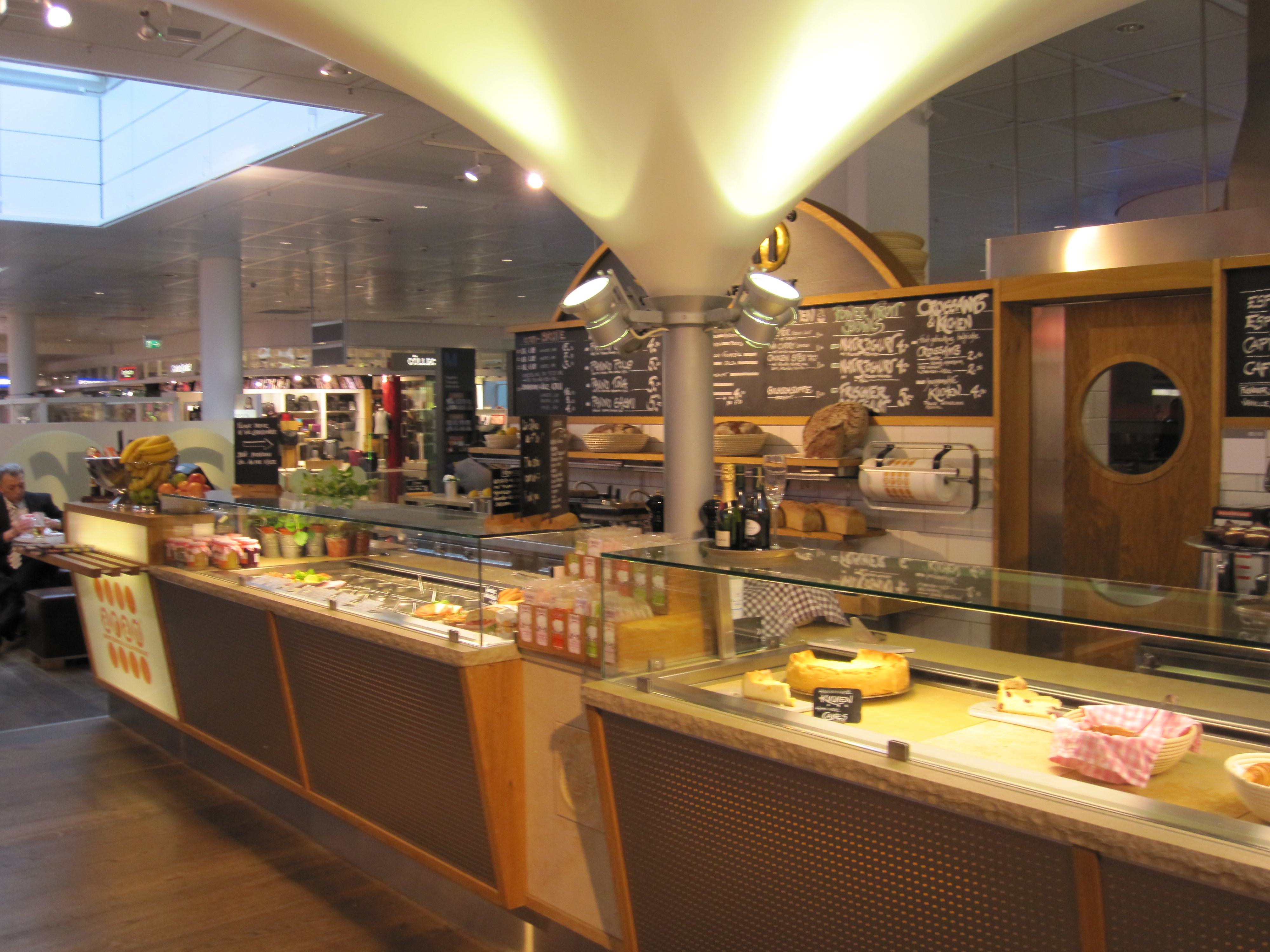
Finally made it home from Italy, another twenty-four hour journey through Munich, which luckily is a decent airport with good shopping, a nice German brewpub with spaetzle (basically a blob of mac and cheese like spaetzle) and good Hefe-weissen, a decent coffeeshop too, where I had an “Espresso on the Rocks” all of this mind you during a three hour delay due to, wait for it, yes, more failed equipment.  All in all it was acceptable until we had to hover over Point Reyes for another half hour due to fog.  Funny how just a half hour can really set you off after a 12 hour flight.

But at any rate the trip was fantastic.  More notes and wine recommendations to come, but for now I need to get back to some other projects including the Golden Glass Wine Competition and Tasting!  On June 12, 2010 I can get my fix of Italian wines as well as wines from all over the world that have a “green” sensibility.  http://www.thegoldenglass.com/

Presented by Slow Food of San Francisco, The Golden Glass Wine Competition 2010 offers green producers a way to showcase their products!  Entry is now open to wines from around the world, not just wineries that are participating in The Golden Glass tasting in San Francisco on June 12, 2010.  That means that wineries can enter wines even if they cannot make the event, opening up the playing field to multiple categories of wine from around the world.  Wines will be judged on their merit with either no award, bronze, silver, gold, best of class and best red, white, sparkling and ultimately Best Wine of Show.

The hallmark of our competition is the emphasis on green production practices.  Unique from most competitions, The 2010 Golden Glass Wine Competition will celebrate the efforts of over 100 international wine producers who strive to protect, nurture, and revive the indigenous and classic varieties of their regions by asking them to sign a statement of sustainability, and by only judging wines that use sustainable, organic or biodynamic methods.  I have judged wine competitions throughout the country, and although some have a special category for ‘green’ wines I have never seen such a commitment to green products.  It’s really exciting to know that when we come up with our list of medalists that each and every one is a wine that the consumer can feel confident about purchasing, good for the planet and a great tasting wine!  Winners will be announced at the Golden Glass Tasting June 12, 2010 where the trade and public can be the first to sample some of the winners.

So keep posted for more information about my top picks from my trip, and in the meantime go get your tickets for the event June 12!


Journey to Italy Day Three Continued: Florence

27 05 2010

May 27, 2010 continued

So despite a lack of sleep I managed to get up on time and head off to meet the rest of our group at breakfast at about 8am and then head along in a Mercedes Benz “van” if you could call it that to Chianti Rufina.  There is a lot of diversity within what the consumer may just know as “Chianti” and Chianti has very little to do with the fiasco, or the woven bottle that you would put a colorful candle into.  The wines of Chianti have always had renown, partially due to the fact that this Tuscan wine growing area is very close to Florence, a major area for banking and a traditionally wealthy city.  Chianti Classico, the original area and a separate DOCG, is just one of multiple Chianti regions, for example Chianti Colli Senese (the area near Siena), Chianti Fiorentini (on the hills near Florence) and Chianti Rufina, not to be confused with the brand named Ruffino which is a totally separate thing.  Maybe I am tired…  It’s really not that confusing, it’s just that each of these regions has different characteristics that make the wines taste different so they are kept separate, the concept the French call “terroir”.  We headed out to Rufina which was an easy 30 km drive northeast of Florence, to Castello di Nipozzano which passed hands in 1877 to the noble family of Frescobaldi when Angelo de Frescobaldi wed Leonia Albizi.

First we visited the famed estate vineyards that range in altitude from the Arno River at 250 meters in elevation to the crest of the hill at 500m.  Soils change as you get futher from the river with sand close to the river, ideal for Cabernet Sauvignon, calcareous clay mid-slope, great for Merlot and the famed soil of the area, galestro, a schistous compressed clay soil towards the higher elevations, ideal for the picky Sangiovese.

Sangiovese is a difficult grape to grow as many California producers have noticed, due to the fact that it has a lot of vigor, it grows and grows, so rocky soils with less nutrients are ideal for it.  These vineyards are at the foot of the Appenine Mountains that run down the spine of Italy from North to South offering cooling air at night to retain aromatics and finesse in the wines.  We met with winemaker Niccolo D’Afflitto at the vineyards and he also guided us through the cellar explaining how he keeps the pumpovers in the winery under close guard by keeping the system closed and only adding oxygen as needed to retain aromatics.  He said he does not ever want to walk into the winery and smell wine, he would rather save that beautiful smell for the consumer when they open the bottle to enjoy it!

We entered the villa and were met by Leonardo Frescobaldi, the President and tasted through the Mormoreto 2006, 2007 and barrel samples of the 2008 and 2009.  The wines are a blend of Cabernet Sauvignon, Cabernet Franc, Merlot and Petit Verdot which seems strange until you learn that these grapes were grown on the property for ages.  Due to unfavorable relations between the Frescobaldi family and the Medici some Frescobaldis left Italy for a time and spent time in France.  One of these ancestors was famed for bringing back these grapes in the 1850s along with some Pinot Noir and Chardonnay now planted in the neighboring area of Pomino.  The Colors of the wines were intense hues of magenta and just as Niccolo had suggested the aromatics were astonishing.  Aromas of mulberry, blackcurrant, resinous herbs jump from the glass and despite the Bordeaux varieties have no resemblance to Bordeaux.  Lifted by vibrant acidity and balanced in their oakiness (the Marchesi de Frescobaldi says “If you like vanilla go buy a vanilla ice cream”) these are wines great for a meal.

We left our wines to open up with some more air and took our “van” up to the nearby estate Castello di Pomino.  This area used to be connected to the Chianti Rufina appellation but has no resemblance to it in either soil or climate.  Way back in 1715 it was demarcated as significant wine growing area, and in 1983 was separated from Chianti Rufina.  The Frescobaldi family are the largest landowners and producers in the region, so it is almost a monopole.

The minute you start winding up the hills to reach this region (a mere 15 minutes from Nipozzano) you feel like you are in a different country.  Leonardo Frescobaldi joked with us to be sure we had our passports!  It really did feel more like an alpine region as pines and different vegetation became visible.  Vineyards here sit at higher elevation, 400-750 meters, so different vines are at home here.  It is named after apples, grown here on the gravelly, acidic soils.  Of course with the different microclimate the grapes grown are also distinct including Chardonnay, Pinot Noir, Pinot Blanc, Riesling, Gewurztraminer and Moscato.

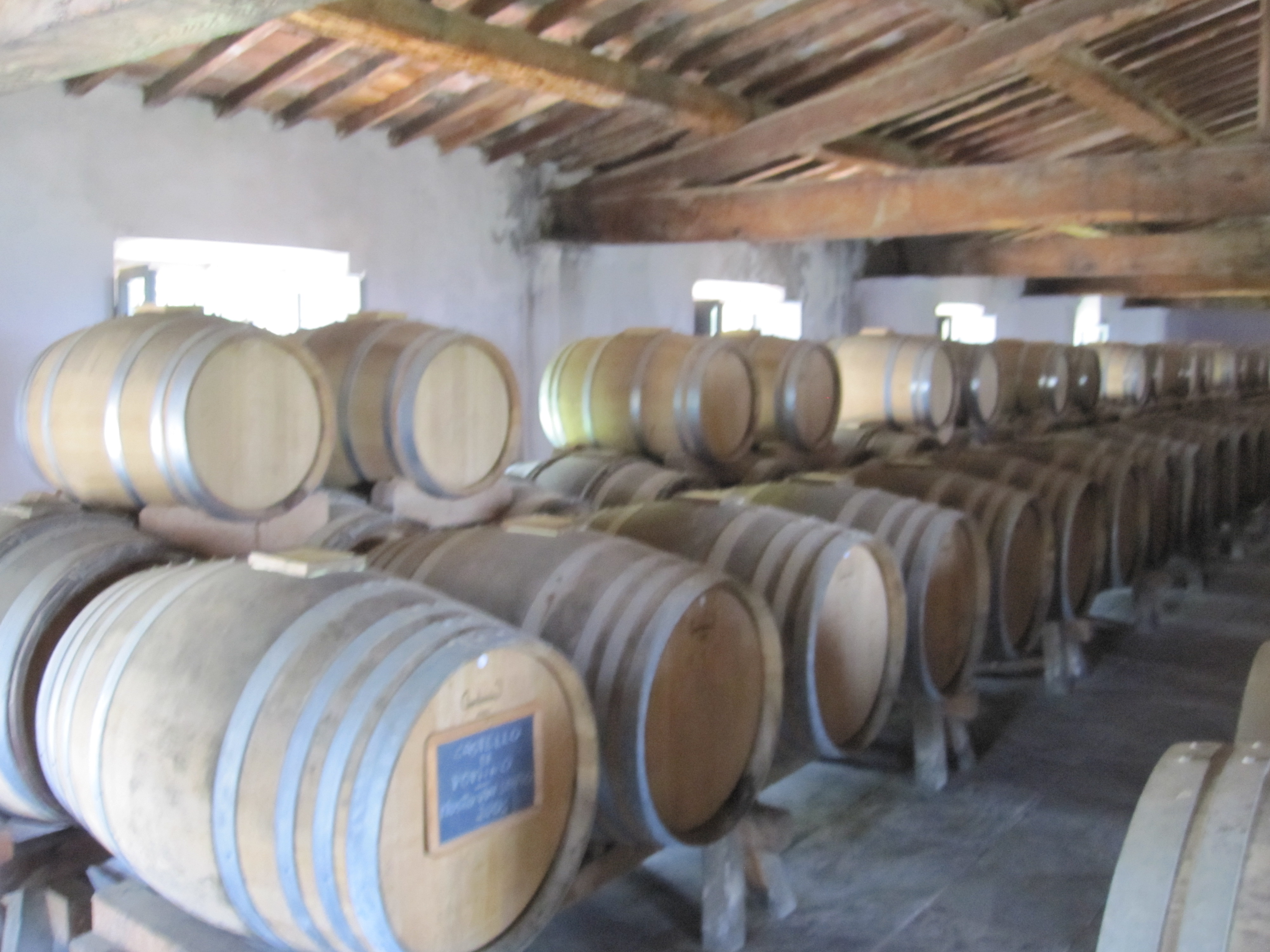
Most exciting for me was the Vin Santeria, or the room where Vin Santo is produced.  Here they take harvested Chardonnay and Trebbiano grape bunches and hang them from wooden rafters with hooks.  The grapes stay there for about three months, in the fall and winter and most importantly this room is up high and has windows that are opened to allow for breezes, always strong in Pomino, to dry the grapes and also prevent spoilage.  After pressing the juice is put into exile in barrels (Caratelli sigillati) 2/3 filled where it ferments slowly.  They close these barrels with wooden tops and try to forget about them for four or five years (they cannot reopen these to check on the wine.)  When they revisit the wine it has evolved into a coppery toned elixir that is sweet (180 g/l residual sugar) and luscious.  We tasted a Chardonnay that they oak and lees stir to produce Benefizio and also a Pinot Noir out of barrel that had a tart cherry nose and a concentrated core of fruit but was unique to Pinot Noir from other wine regions.

After visiting the newly restored chapel frescoes we jumped back into our “van” and zipped back to Nipozzano where we enjoyed lunch with Marchesi de Frescobaldi and Tiziana Frescobaldi Board Member and Director of Press Relations.  We enjoyed a ricotta puff pastry on a bed of spinach drizzled with pesto, which was perfect with the Pomino Benefizio 2007, Capellini pasta with a simple and delicious tomato basil sauce, with Nipozzano 2007 Chianti Rufina Riserva (90% Sangiovese with the traditional grapes completing the blend) and then a Gallentine en Pollo (stuffed chicken) with rosemary potatoes and cauliflower with Montesodi Riserva Chianti Rufina 2007 (100% Sangiovese).  We finished with an almond cake and Vin Santo.

After saying goodbye to the family we toured the old wine cellar where the family’s ration of wines are stored in anticipation of their use when they are born and then headed back to Florence.

Upon entering the hotel I was met with the effusive smell of jasmine, did a quick change into shorts and FitFlops and hit the city of Florence hard (I only had three hours).  I made a bee line to the Officina Profumo-Farmaceutica di Santa Maria Novella at 16 Via della Scala www.smnovella.com.   Santa Maria Novella is one of the oldest pharmacies in the world founded by Dominican friars after 1221 who made medications from the herbs grown in their gardens.  Amazingly it has been open to the public since 1612.  For anyone that loves perfume and scent this place is mecca.  When you open the doors you enter a marble corridor and are immediately greeted by an intriguing mix of aromatic essences all of which mingle into a unique scent reminiscent of light top notes of fields of flowers but also incense and heavier aromas.  The main room is gorgeous and impossible to capture on film despite the numerous tourists who are there trying.  It seems almost sacrilege to try to photograph this ancient site and the filtered light gives a very serene calm to the place.  Three rooms house the wares, one for the edible items, one for the home fragrances and accessories and the main room for the essential oils and perfume.  Scent strips are available and you can peruse the list in multiple languages and ask to smell anything you wish.

After enjoying Santa Maria Novella I hoofed around in search of leather goods and found them over at the boar where you can rub its snout.  I ended up walking all the way to Santa Croce and then walked across the Arno on the Ponte Vecchio, focal point of the city, over to Palazzo Pitti and Santo Spirito and then back across and yes, back to Santa Maria Novella to revisit an aroma and ultimately back to the hotel.

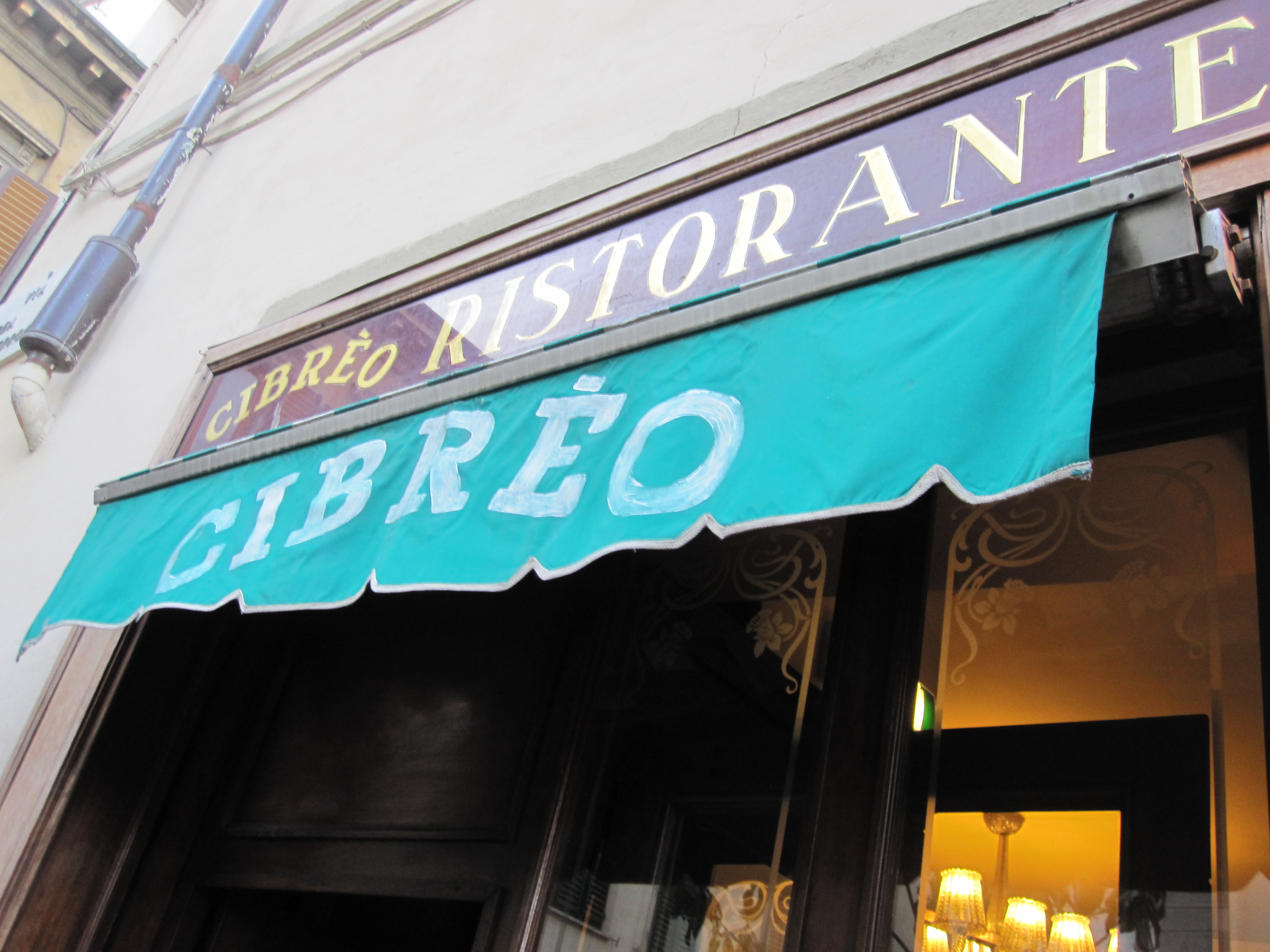
Dinner was at Cibreo where we were treated like royalty (I guess that is what happens when the Frescobaldi family makes your reservation).  Waiters here have no written menu but sit with your table for consultation, many extra dishes were brought to taste.  We drank Luce della Vite, a more modern style wine coming from the Montalcino area  and 2005 Mormoreto.  Dishes were too numerous to mention but the highlights included pickled carrots and zucchini, a flan with meat sauce and parmesan, spicy tomato aspic, a minestrone with amberjack (a fish) that was killer, and my entrée, rabbit in a dark chocolate sauce with spices including cumin and raw hazelnuts.  The dish was so intriguing and made me think of mole from Mexico.  It was truly delicious and made me wonder how these cultures melding created this dish that son of owner Fabio Picchi said has been passed down through his family for generations.

Overall it was a great day, fueled by adrenaline and vibrant sights and smells I never even lagged.  I tried to write when I returned to the room, but fell into a happy slumber and awoke this morning at about 5:25 eager to write and hearing all the glorious birdsong that’s just a bit different than that in the US.  Stepping onto the balcony I got a strong waft of the just extinguished waxy smell of the citronella candles on the cool morning breeze, kind of a mix of summer picnics and church.

Today we leave Florence and head to Umbria.

Cibreo Ristorante Via A. Del Verrocchio, 8 r Florence 055 234 11 00

http://www.frescobaldi.it

Santa Maria Novella Via della Scala, 16, Firenze http://www.smnovella.com


Anderson Valley Goes for Gold at Alsace Varietals Festival

18 02 2010

Looking for a way to bring some spring sunshine into your weekend?  Whether or not the weather cooperates, Anderson Valley Winegrowers will hold their 5th Annual Alsace Varietals festival this weekend, Saturday and Sunday February 20-21, 2010.  The wines focus on varieties grown in the French region of Alsace, Riesling, Pinot Gris, Pinot Blanc, Muscat, Gewurztraminer and a bit of Pinot Noir.  Alsace shares a border with Germany and over time has flip-flopped between the two countries.  As a result of the Germanic influence and the northerly climate the varieties they use are more Germanic than French.  These varieties are also pleasantly at home in the cooler climate of Anderson Valley, part of Mendocino.  The area is known for it’s winding roads, friendly and casual feel and quaint comfortable lodging.  As soon as you begin winding up the roads north of Sonoma you will notice the difference in climate, topography and just the attitude.  Alsace varieties love the cool climate that results from the opening to the sea at Mendocino and “air conditioning” from cool air during the summertime.  This results in wines that are more racy than most with refreshing acidity and moderate alcohol.  Add to that the lovely aromatics of these Nordic varieties, and you will find them a perfect accompaniment to watching the alpine events at the Olympics!  If you can tear yourself away from the Olympics, you’ll find that the wines exemplify the precision of Lindsey Vonn with the gusto of Shaun White and the razor’s edge of Apolo’s skate blade.

The weekend includes a technical conference Saturday morning where you can geek out about viticulture and vinification of these varieties followed by a fun tasting during the day and a winemaker’s dinner at the Boonville Hotel Saturday night.  If you can only make it for the day head on up for a number of open houses in the region Sunday Breggo Cellars, Claudia Springs, Esterlina Vineyards, Greenwood Ridge, Handley, Husch, Lazy Creek, Londer, Navarro, Phillips Hill Estates, Philo Ridge Vineyards, Toulouse Vineyards, and Zina Hyde Cunningham.  For tickets http://www.avwines.com/store/

If you can’t make the journey, get in the spirit with a glass of Claudia Springs Klindt Vineyard Pinot Gris at Pacific Catch 9th Avenue in SF or Corte Madera.


Cranberry Blog

23 11 2009

Tart and unassuming the humble cranberry will once again take second seat to many Thanksgiving turkeys this year, but they have certainly earned a spot at every American Thanksgiving table, and to omit them from this harvest celebration would be extremely unconventional.  I had a chance to learn a bit more about our favorite seasonal side dish firsthand at a talk at Nantucket’s Whaling Museum in Fall 2008 given by second generation cranberry farmer Tom Larrabee Jr.  His father has worked in Nantucket’s bogs since he was a teenager and has managed them since 1959.

Cranberries were first harvested in Dennis, Massachusetts (Cape Cod) in 1816 by Henry Hall.  Named for the resemblance of its flowers to the head of a crane, early producers discovered that the vine, closely related to the blueberry, was an ideal mate for the Massachusetts geography.  Their presence at the Thanksgiving meal is likely due to the fact that this was also a symbol of peace to Native Americans.  Cranberries enjoy peat bogs which provide moisture for the vines during the growing season, but they also benefit from covering the vines with sand.  Sand stimulates new growth of the roots, controls insects and prevents the disintegrating peat from being toxic to the plant.  The third requirement is fresh water for frost protection, irrigation and since the 1980’s harvesting.  As a result in 1857 settlers of Nantucket Island, 30 miles off the coast of Cape Cod, decided that planting cranberries on the peat marshes off of Milestone Road would be a good idea.  Cranberries had already garnered a great reputation for seafarers as their presence on ships prevented sailors from getting scurvy due to their high content of Vitamin C.  Cranberries still have these wonderful health benefits and in addition an incredible amount of antioxidants and an antiseptic nature that allows them to be useful to prevent bladder infections and eradicate E. Coli.

From that moment, the cranberry and Nantucket seemed a perfect pair.  Despite the fact that Nantucket produces much less than Wisconsin (the largest U.S. producer), those that know the island think of it as a hub of production.  Currently Nantucket has about 250 acres of cranberry bogs and 25 of the 37 acres in the Windswept Bog are organically grown producing 1/2 a million pounds of organic cranberries in 2008.  Production of organic berries typically yields 60-70% less than conventional production and takes a lot more effort, but organic berries garner three times the price of conventional berries.  Since 1968 the Nantucket Conservation Foundation has stewarded the island’s two commercial bogs.  www.nantucketconservation.org

Cranberry harvest begins in September with Early Black, dark blackish red berries, and continues through October and November with the Howes cranberry, a lighter red and more oblong shaped berry.  Because of the floating nature of the berries, flood harvesting has been the preferred method since the 1980s, and has become a familiar site to most of us from Ocean Spray commercials.  One of the challenges for cranberry production on island is coordinating picking schedules with the ferry boat schedule as processing of berries is off-island which should ideally be three to five days before freezing.  Another crucial ingredient for successful cranberry production remains bees.  The flowers at bloom produce very heavy pollen that prevents vines from self-pollination by wind, so 432 hives are brought in to do the deed.  These bees pollinate Maine’s blueberries in May and then head to Nantucket for prime time at the end of June through July.  The bees are late risers and active from about 10am until 5 or 6pm, and while they are busy at work farmers stay out of the bogs until berry set.  Bees arrive on one truck but leave the island on two trucks after their plentiful pollen eating and even provide another great local product, Nantucket cranberry honey.  Berries turn green then white and finally blush to red close to harvest time.

Cranberries are useful for more than sauce, and a suggestion from Tom is to keep the berries frozen when you use them in baking to allow them to better keep their shape.

My favorite sandwich from Nantucket takes advantage of the cranberry history and is perfect for Thanksgiving left-overs, it’s called the “Turkey Terrific” produced by Provisions 3 Harbor Square Nantucket 508 228-3258.  While Provisions is closed for the winter you can make it at home, use a good roll, sliced turkey, left over stuffing and a good slathering of cranberry sauce.  And if you are at my house you would have to fight over using sauce versus the gelatinous canned cranberry jelly, my husband prefers the latter, so we always serve both.

See Tom Larrabee Jr. and the harvest at http://www.plumtv.com/videos/nantucket-nantuckets-organic-cranberry-bog/index.html


Going Whole Hog

20 10 2009

From Nose to Tail was the title of the seminar here at the Sante Restaurant Symposium 2009 in Lake George, NY.  Chef Jamie Bissonnette of Toro and the soon to open Copa in Boston, MA was on hand to demonstrate not only the butchering of a pig but also the unique ways to use a whole pig.  With the popularity of salumi and charcuterie as well as the importance being placed on sustainability, it is no surprise that more and more restaurants are butchering whole animals.  Of course it takes a great deal of training and skill to know how to butcher, but it also takes planning and some research.  Bissonnette cautions those interested in taking the plunge to be careful.

Bissonnette explains that butchering a whole animal must first be profitable.  His restaurants offer small plates and a menu with about fifty items so he has the luxury of offering items at all different price points.  An example is he will butcher multiple animals and save the parts for future specials that he can run when he accumulates enough.  Do not forget the time commitment necessary to hang the meats and age them, this is in effect resources tied up in inventory, it takes up room, it could be aging for a significant amount of time.

Go local.  Knowing your source and the farmer is vital to ensure you understand the breed and provenance of the animal.  You will know what the animal was raised on and can get to know how this affects the flavor of the product, fat content, etc.

Be safe.  if making salumi be sure to follow recipes.  Bissonnette insists that nitrates were made for a reason, and care must be taken when making charcuterie to prevent illness.  Use resources such as recipes and books from reputable sources to ensure you do not waste time, money and energy.  This also prevents the danger of experimenting which could produce disastrous results.

The restaurant size will determine how big of an animal you are able to butcher, at Toro they have limited room so are unable to bring in multiple animals at a time.  Storage of course can also become an issue, if the walk-in is not big enough you may not be able to store a full pig and may need to butcher immediately upon delivery.  This relates closely to the size of the animal you bring in.  The pig Bissonnette butchered was only sixty pounds, and for example a pig that size does not provide a large slab of bacon.  It is important to estimate your needs and portion sizes as they will relate to the size of the pig you will need to purchase.  Bissonnette suggested that the sizes of cuts we are familiar with come from animals between four and five hundred pounds.  This may be impossible to butcher in house.  The method of breaking down the animal will vary also according to your resources.  Bissonnette uses cleavers and knives since they do not have room for a bandsaw or mechanical saws.

Bissonnette explains that only if you use the entire animal butchery can become profitable, if you focus on the primal cuts you will miss out.  No scrap is wasted.   Pieces of fat are smoked and used to flavor stocks and broths.  Random bits make lard that can be used to make lardo.  He even takes bones which he boils and then rolls in rice flour and fries for a hearty hands on snack.  The funny thing is there is one piece that will not make it to your plate if you go to Toro, and that is the small pork skirt.  He fries that up for himself.

IMG_2903


Napa Harvest

12 10 2009

IMG_2653

Napa Valley in the heat of harvest is something very special.  The last few weeks I have been spending some time in the valley, for the Staglin Music Festival for Mental Health, and classes for the National Pork Board and last week for Mastering Wine I at the Culinary Institute of America Greystone in St. Helena at the northern end of the Napa Valley.  The valley is absolutely bustling with the excitement of harvest and grapes are not the only thing being harvested!

While fermentations simmer and the threat of a big storm in the Bay Area looms, the last few weeks have been balmy and downright cool, a very unusual harvest, but as I reported to my class last week, it really seems that the grapes know what is best and man just has to be paying enough attention to do the right thing.  I remember being awakened on the day of the Staglin Benefit for Mental Health to the sound of thunder (my WORD!) and raindrops, so unusual for the valley.  I had heard that veraison (the point at which grapes begin to turn color and ripen) had been early, but this was truly unique, to have an overcast cool day for this event had not happened in the nine years I had worked it.  Overall the season was cool and in the last week I heard from many vintners that Brix levels (level of sugar at harvest) are lower than normal but with exceptional maturity.  This means lower alcohols with just as much flavor!  (to read more about why go to http://www.winebusiness.com/wbm/?go=getArticle&dataId=17093)  It just goes to show that sometimes the vines have forewarning as to when they should get their fruit ripe and hunker down for winter.  From what I hear many were spooked by the storm warning predicted for Tuesday and have harvested.  For Twitter updates head to @NVGrapegrowers to find out who is harvesting.

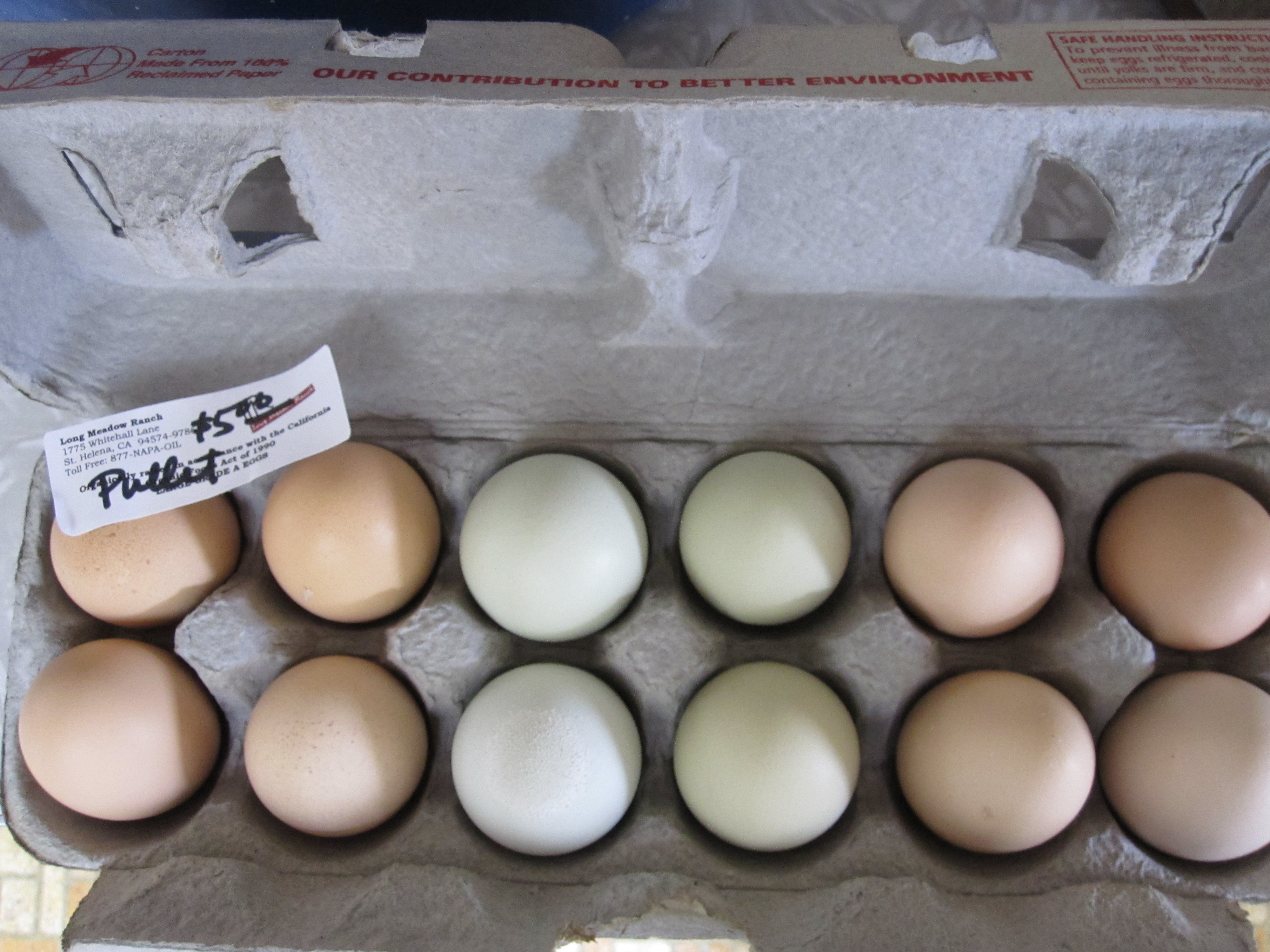
But Napa Harvest is not just about grapes!  One of my favorite things to do whenever I am in the valley is to hit the LMR Rutherford Gardens.  Operated by Long Meadow Ranch they are a produce pavilion right in the heart of Rutherford, across the way from Grgich Hills Winery on Highway 29.  While known for great wine and free-range beef the bounty at the gardens is the produce, and although summer is high-season, I love their fall offerings.  They have a newsletter that you can sign up for if you are interested in knowing what is in season in advance, but I prefer to be surprised!  Recently they had amazing nobby potatoes, five varieties of garlic, zucchini, an abundance peppers and possibly the last of amazing heirloom tomatoes.  If you hit the stand at just the right time you may be able to get some eggs!  I was lucky recently and grabbed a set of pullets, small sized eggs, in pastel colors that would put any Easter basket to shame.  And they were $5 a dozen and delicious!  Plus Long Meadow Ranch makes great wine!  They also offer jeep tours of their vineyards and cattle ranches!

IMG_1997

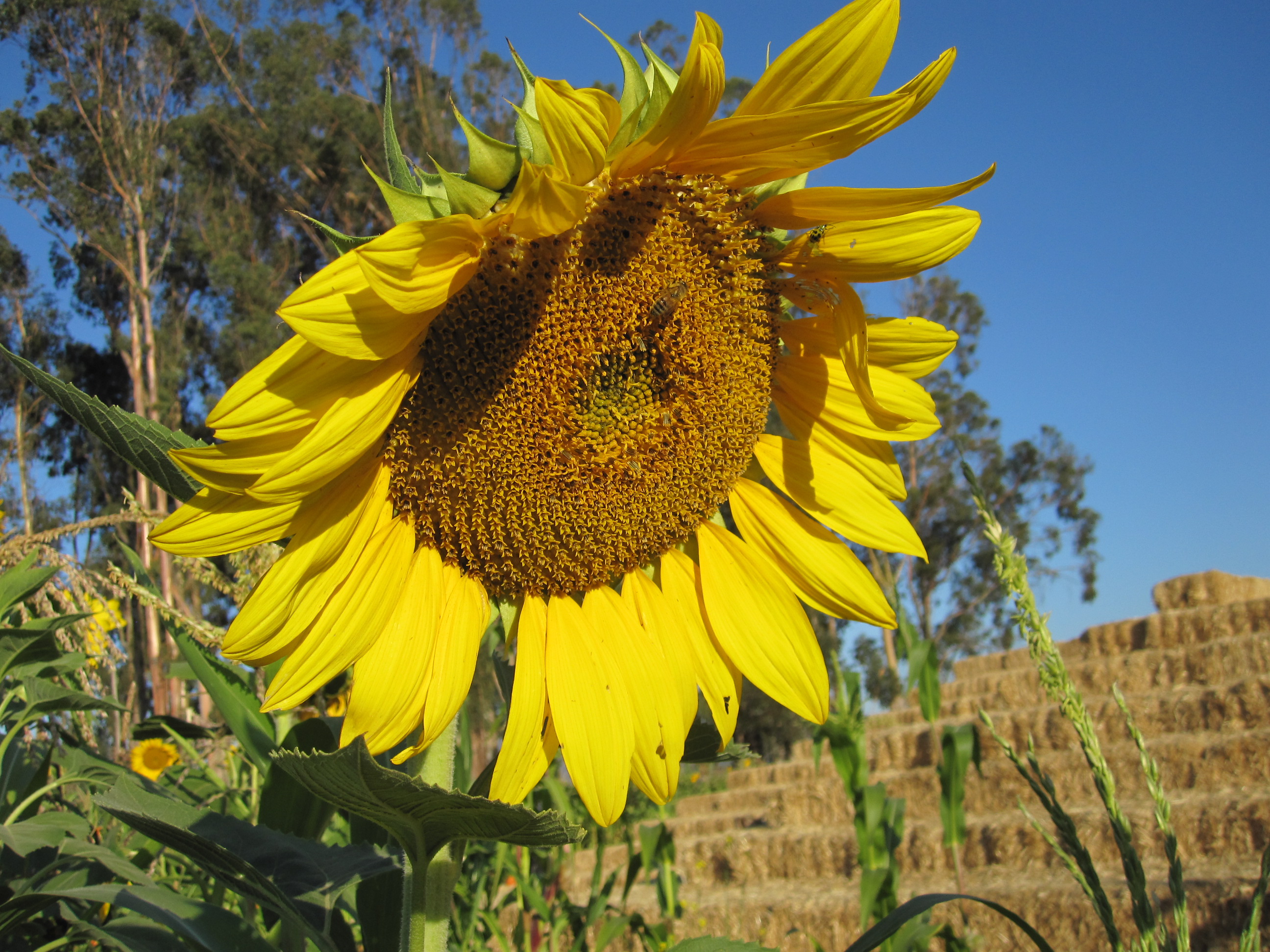
Further down valley I make another stop as I turn towards Sonoma onto 121 headed back to San Francisco, Stanly Lane Marketplace.  This country store has amazing coffee, they do a fabulous iced Americano that almost lasts until I drive over the Golden Gate Bridge.  They offer some foods and seasonal crafts from local artisans including adorable gourd art for Halloween.  Its a fun way to break up the drive.  They also sell used barrels and if you are lucky staves and barrel tops, which I am fond of (I make them into lazy susans).  In the same parking lot they have a farm stand offering produce from many Bay Area farms, and are nice enough to specify the origin of every piece of produce on its sign.  In the height of summer they usually have Brentwood corn and nice heirlooms, peaches and nectarines in season.  My favorite time of the year, though, is when they create their incredible field of pumpkins for Halloween.  It is awash in oranges but they also stock multiple heirloom squashes in an array of untraditional shapes and colors, at much cheaper prices than most markets.  Plentiful wheelbarrows are available for rides for the kids and the pumpkins.  Pigs are on view carousing over smashed gourds for the kids to watch (and smell).  This year I was super excited to see that they added a corn and sunflower maze to the scene.  At five o’clock as the sun was exhibiting a much different angle in the sky than usual, it really made it feel like fall.  Hurry!  These places shut down seasonally!

LMR Rutherford Gardens 1796 So. St. Helena Highway Rutherford  http://www.longmeadowranch.com/Gardens/Rutherford-Gardens

Stanly Lane Marketplace 3100 Golden Gate Drive Napa, at the corner of Stanly Lane and Hwy 121/12, Napa 707 253-7512

D&S Produce Stanly Lane Pumpkin Patch, at the corner of Stanly Lane and Hwy 121/12, Napa 707 480-4479

Wednesday, Thursday and Friday 10-6pm, Saturday and Sunday 9-5pm

IMG_2671IMG_2663IMG_2673


WhiskyWeek 2009

7 10 2009

Although I will be away I wanted to let the “crew” know about the 3rd Annual Whiskey Fest on October 16, 2009 at the San Francisco Marriott and Whisky Week.  Go to maltadvocate.com to get more information about the events in store.  Also Elixir is doing some really cool seminars, see below.  Charbay is having a party on October 10 that you may want to check out!

Charbay Annual Barbecue & Wine Club Party

12pm – 4pm
Charbay wines, ports, aperitifs & the favorite foods we’ve shared through the years.
Also:  Marko’s Private Port Blending Seminar 11am
Marko Karakasevic, 13th Generation winemaker and distiller
will lead you on a sensory journey of smell and taste as he
guides you in blending vintage ports from our library of barrel-aged ports.
Purchase Tickets & Information – Call 707.963.9327 ext 23 or visit@charbay.com

ELIXIR ANNOUNCES WHISKYWEEK 2009 SEMINAR SERIES

Exclusive Tastings, Local Distillers and Marketing Tips lead into 2009 WhiskyFest

(San Francisco, CA September 28, 2009) Seminars are strictly limited to 25 seats at $35 per person and tickets are available through a link at www.ElixirSF.com/events.htm

Sunday, October 11th, 6pm to 8pm

David Blackmore, Glenmorangie Brand Ambassador

Join us at Elixir for an exciting and educational adventure through the aging process of one of the best selling Single Malt Scotch whiskies in the world. David Blackmore with the Glenmorangie Distillery will be on hand to lead us through a tasting of a selection of the Glenmorangie portfolio. This tasting will involve a full sensory analysis of the components found in Glenmorangie whiskies, helping you to better understand how to analyze and understand a spirit from every perspective. David is a native of Scotland, a Graduate of the University of St. Andrews, a former chair of the prestigious Tasting Panel at the Scotch Malt Whisky Society in Scotland and has spent time working alongside the famous ŒSixteen Men of Tain‚ at the Glenmorangie Distillery and at their sister distillery Ardberg.

6:00pm Meet and greet with welcome cocktail and appetizers
6:30-7:30 David’s presentation
7:30-8pm Q&A

8pm to 2am Glenmorangie dram and cocktail specials in Elixir

Monday, October 12th, 7pm to 9pm

Marko Karakasevic, 13th Generation Master Distiller, Marko K Spirits & Domaine Charbay

Marko Karakasevic is the 13th Generation Distiller in his family and has been distilling with his father for 26 years at Charbay Winery and Distillery.  Having distilled brandies, rums, tequila, and several new and classic styles of whiskies, Marko and his family have distilled every class of spirit and continue to push the creative envelope in the world of spirits. Elixir is the first whiskey bar in the world to have Doubled and Twisted IPA Light Whiskey. Join us to hear of the family history, taste Charbay Pilsner Whiskey II, learn about their unique distilling methods and the philosophy behind it all,  and try a cocktail or two.

7pm Meet and Greet with welcome cocktail

7:30 to 8:30 Marko’s presentation

8:30 to 9:00 Q&A

9pm to 2am Charbay and Marko K dram and cocktail specials in Elixir

Tuesday, October 13th, 7pm to 9pm

St. George Spirits‚ Master Distiller Lance Winters

In this second round of our local whiskey distillers, Lance Winters will present how they do it over in Alameda when it comes to whiskey. The famed Hangar One on that nearby island has been creating a wide array of ground breaking spirits, including the St. George Single Malt Whiskey. Their use of three woods in the aging process and eau de vie distillers’ approach makes for a unique American whiskey; one of the first in a new generation of whiskey distillation that moves beyond the borders of Kentucky and Tennessee.

7pm Meet and Greet with welcome cocktail

7:30 to 8:30 Lance’s presentation

8:30 to 9:00 Q&A

9pm to 2am St. George and Hangar One dram and cocktail specials during The Elixir Quiz

Wednesday, October 14th, 7pm to 9pm

Gardner Dunn, Yamazaki Brand Ambassador

What is Japanese whisky? Yamazaki Brand Ambassador and famed New York bartender Gardner Dunn will take us through the history and evolution of whisky production and presentation in Japan. We’ll taste some of the Suntory brands, including some unique wood finishes on Yamazaki and the first tasting of the new Hibiki 12 Year, being released in the US on that day! Gardner will give us a visual tour of their distilleries and cooperage as well as Japanese bartending tools and ice sculpting. Truly a unique whiskey experience.

7pm to 8:30pm Gardner’s presentation (including welcome cocktail)

8:30 to 9:00 Q&A

9pm to 2am Elixir Charity Guest Bartending event for The Bartender Relief Fund, benefiting Chicago Bartender Kyle McHugh and featuring Gardner, Elixir bartenders H. Joseph Ehrmann and Alicia Walton and Bartender Fund President Tony Devencenzi.

Thursday, October 15th, 7pm to 9pm

Peter Schwartz, Founder and President of International Beverage Company, Inc.

Having 28 years of experience in the alcoholic beverage industry, Peter is a recognized authority and national speaker on the making, marketing, selling, and serving of whiskey, not to mention his excellent nosing and tasting skills. Welcomed in 2008 into the Keepers of the Quaich, the exclusive Scotch whisky society, Peter will discuss a survey tasting of the Scottish Highlands (Deanston), Isle of Mull (Ledaig and Tobermory) and Islay (Bunnahabhain and Black Bottle). We‚ll look at how they are different from other single malts and blends, the distillation process for each product and the difference of a non chill-filtered product and filtered product.

7pm to 8:30pm Peter‚s presentation (including welcome cocktail)

8:30 to 9:00 Q&A

9pm to 2am – Discounts on all products tasted by the dram or cocktail

Friday, October 16th, 7pm to 8:30pm

WHISKYFEST 2009

Marriott San Francisco

http://www.maltadvocate.com/docs/whiskyfest/san_francisco/default.aspx


Los Angeles County Fair

2 10 2009

The Los Angeles County Fair ends this weekend!  I am usually there to say goodbye to the fair on its last weekend.  It is my favorite time.  I get to spend the last hours with the Sham-Wow and Ginsu knife salesmen hanging at the bar discussing the last few weeks.  This year they extended the fair by a week meaning that it conflicts with Hardly Strictly Bluegrass in Golden Gate Park, so I had to go last weekend, the second to last weekend.  I absolutely love the fair.  Perhaps it has something to do with me growing up in suburbia and not knowing anything about what a county fair was like, or if it even existed, and then reading Charlotte’s Web and wondering could that really happen?

I think that when I read the book I thought that the idea of a fair was fantasy along with talking pigs and spiders, but now I understand that the fair is truly an interesting and amazing relic in our culture.  The LACF as we like to call it is a huge organization encompassing all realms such as concessions, rides, events, concerts, exhibits, etc.  I happen to run the Los Angeles International Wine and Spirits Competition Spirits portion, but while we are judging spirits earlier in the year there are judges judging wines, beers, jams, pies, pickles, tapestry items like quilts or baby blankets, tablescaping (setting up a cool table for a party), etc.  Once the fair gets going they start judging a la minute the things that are a bit more timely like pigs, cows, etc.  While some might balk at the idea of a county fair the process although steeped in tradition really offers up an opportunity to embrace the culture of farming that used to exist in this country years ago.

I made a joke while teaching my wine class at the LACF that I had visited the goats and that they looked delicious and was accosted by laughs and raised eyebrows (about fifty-fifty) but the point is that our food has to come from someplace and to take your children to the fair really brings that point home.  If you have decided to  serve your brethren meat then I feel you should be comfortable in finding out where that comes from and showing them what that looks like and how it is sold.

The fair is such a wonderous place to me, I so enjoy the fair food, like my favorite character Templeton in Charlotte’s Web I find joy in the luscious foodstuffs that are presented to me!  My favorites are:

Dr. Bob’s Ice Cream ANY flavor, great stuff.  Tell Ruth I sent you if you go.

Roasted Corn: Best Spot is near the Fairview Farms add butter, chili powder, salt, etc. but bring lots of napkins

Steamed Artichoke with Mayonnaise: On the main food alley really pleasant to get your veg while enjoying the fair

Barbecue from ???? ask the fair workers who is serving the best right now, it changes year to year.  Get extra sauce and don’t forget the tooth floss, this is no classy knife n fork bbq, this will take effort

Wine Sampling: Head over to the Ralph’s Wine and Spirit Marketplace  to taste some of the gold winning wines and spirits!  Take classes to learn how to taste, this is unique to fairs across the country and offers you a great chance to meet up with fun wine lovers

Go to the booth near the racetrack to try the latest in fried food!  Although you might not be up for deep-fried frog’s legs or fried Spam you may want to camp out at the booth and try what they have to offer!  It’s amazing to see folks embarking on a culinary fiasco, so enjoy the view!

Animals:My favorite part of the fair is getting to know the animals.  This year I saw baby goats!  There were tons all jumping around, but the most amazing were the ones that were born while I was teaching my class on Spirits at the Ralph’s Marketplace!  They were 2 HOURS old!  The mother was still getting to know them and it was super cool.  The barns are incredibly well kept and clean and they even offer hand washing stations so after you get down and dirty with the farm animals you can clean up.

Head out to the fair this weekend if you are in the area of Pomona, CA and you will not be disappointed!

http://www.lacountyfair.com/2009/

IMG_2441


My Religion

20 09 2009

Visiting John Williams at Frog’s Leap is like religion for me.  I am not always the most overtly religious person you may have met despite growing up Catholic, but I have always felt that I am very spiritual.  That said, although I appreciate the ritual that goes on every Sunday, and can stand to attend every now and then, there were numerous times that stick out from my childhood where I was either a) fainting b) bored or c) listening to a sermon about a frog and how its kinder to put douse a frog in boiling water than to put a frog in cold water and bring it to a boil (what!?).  Seriously, that was the Homily one day.  I thought that was for lobsters.

So I have found peace by finding my “religion” or inspiration in other ways.  Sometimes it entails a walk on the beach, sometimes a long drive (amazingly that puts me in the mind frame to thank a greater being every time) sometimes just crying or singing or strumming or feeling.  And, long story shortened, there are certain people who accomplish the task for me effortlessly.

John Williams is religion for me.  While his own spirituality is immensely uplifting, and I am almost afraid to delve into that further, his day to day way of operating his business is an incredible inspiration.  I have visited John almost too many times to mention, but each and every time I go he preaches to me, but not in a way that is condescending or authoritarian.  He acknowledges the universe and its magic while being realistic.  He gives back to the planet and he is here to serve.

We joke when we meet that by now I’ve heard the tour at Frog’s Leap so many times that I could give the tour myself.  Truly I have bought into 100% of the “schtick” and totally believe in it.  I find comfort in knowing the direction he is going, in silently nodding while he lets out the line and reels the crowd in.  He makes arguments without being competitive and always has supporting evidence.  He gives good tour.  And don’t get me wrong, he has an entourage of folks that he has groomed with his philosophy that give equally great tours.  The flock gets it.  Other wineries should take notice.

But as you sit or walk or sip through the experience, something becomes innately clear.  He totally buys into it himself.  He is not a preacher that fails to recognize or abide by his gospel.  He lives it daily.  You know when you talk to him that he is only giving you as much information as he feels you need today, and he will share more with you as your relationship and devotion and readiness increases.  He is imminently patient and never one to call someone out for doing the wrong thing, but he asks questions and allows you to determine for yourself what is right and what is wrong.  He lets you choose your own path.  And isn’t that what we should aspire towards?

What in the world does this have to do with wine?  I think everything.  I am convinced that although it may be hard to prove, human energy is distilled into all that we do.  An incredible work of art is not always just technique, I feel that a piece of that artist and their inspiration rest in that art forever.  For John and other select winemakers, you can taste their craft and their passion in each and every bottle.

John’s 1991 Frog’s Leap Merlot was opened on our last visit as a special treat.  You could taste raw inspiration, hope, fear, and bravery in his second vintage of red wine.  Find that one or go for the 2005 Frog’s Leap Rutherford which is a blend of pride, honor, respect and humility.